Phone: 0731-3121900, Mob: 9229297668, 9826655552

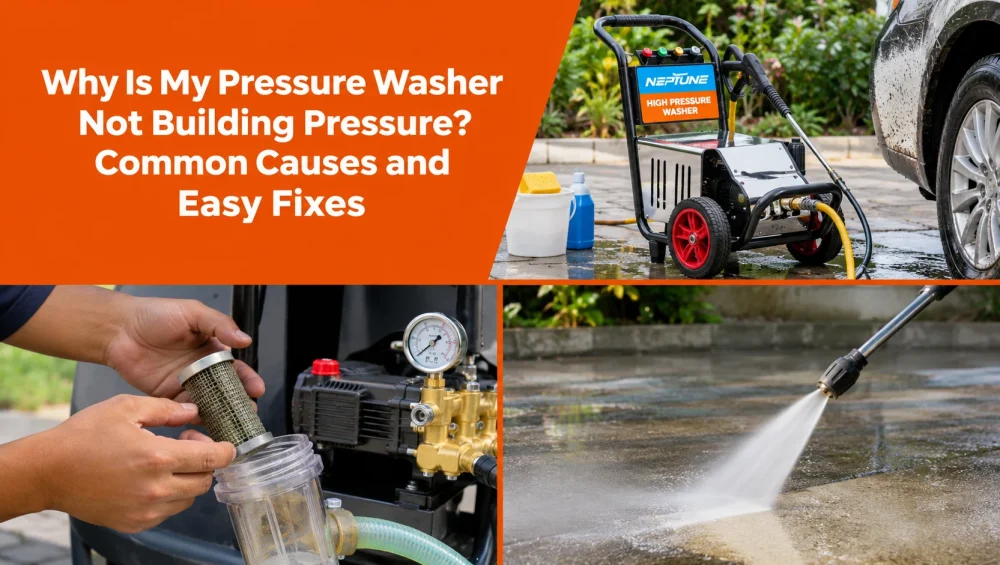
A pressure washer makes cleaning much easier, whether you’re washing a car, removing mud from farm equipment or cleaning a driveway. But what happens when you switch on the machine, pull the trigger and only a weak stream of water comes out?
The motor may be running normally, the water supply may be connected, and everything might look fine from the outside. Yet the pressure washer isn’t producing enough pressure to remove dirt.
It’s a common problem, and it doesn’t always mean the pump is damaged.
Sometimes, the issue is as simple as a blocked nozzle, insufficient water supply or air trapped inside the system. Other times, worn pump components or a faulty pressure control system may be responsible.
If you’re wondering why your pressure washer is not building pressure, this guide explains the possible causes, how to identify them and what you can safely do to get your machine working properly again.
How Does a Pressure Washer Build Pressure?
Before looking at the problems, it helps to understand how a pressure washer works.
A pressure washer uses a motor or engine to drive a pump. The pump moves water through a high-pressure hose towards the spray gun and nozzle.
The nozzle restricts the flow of water, helping the system develop the pressure needed for cleaning.
The main components include:
- Water inlet connection
- Inlet filter
- Electric motor or engine
- High-pressure pump
- Pressure control or unloader valve
- High-pressure hose
- Spray gun and trigger
- Spray nozzle
All these components need to work together.
For example, even a powerful pump cannot deliver its expected performance if the incoming water supply is insufficient or the nozzle is badly worn.
That’s why it’s worth checking the simpler components before assuming the entire pressure washer needs repair.
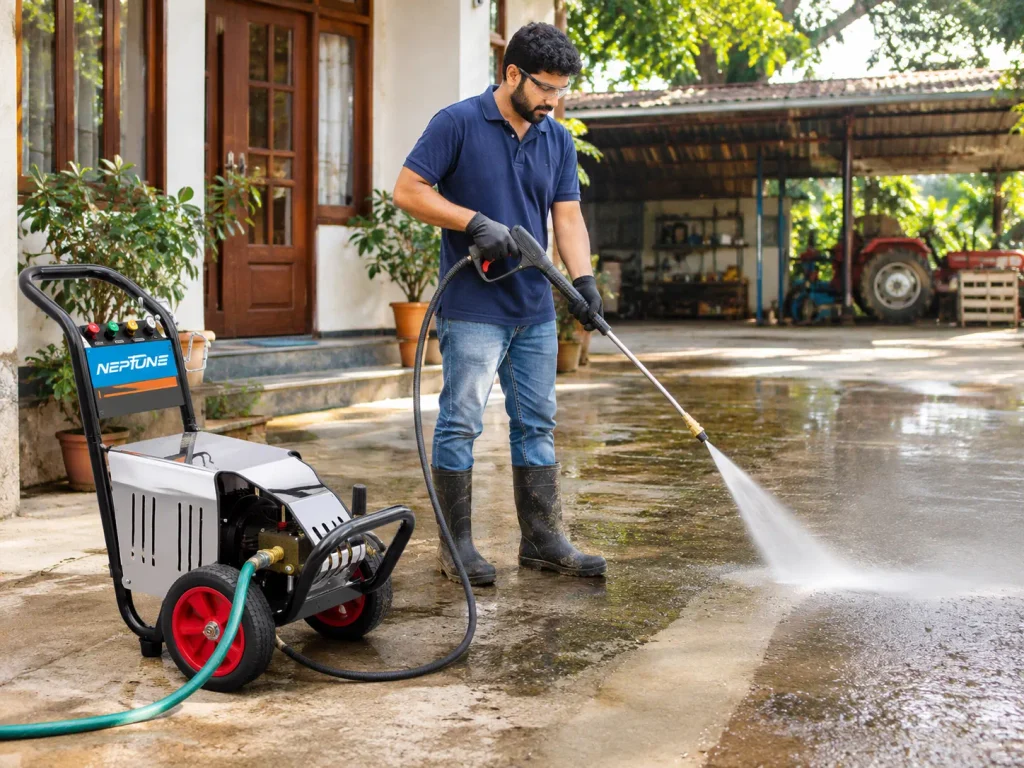
1. Insufficient Water Supply
One of the most common reasons a pressure washer loses pressure is an inadequate water supply.
A pressure washer needs a steady supply of water at the flow rate specified by the manufacturer.
If you’re using a long garden hose, a partially closed tap or a water source with low flow, the pump may not receive enough water.
This can result in weak or fluctuating pressure.
How to Fix It
Start by checking the water supply.
Make sure the tap is fully open and the inlet hose isn’t bent, crushed or blocked.
Check whether the water source can provide the minimum flow required by your pressure washer.
If you’re using a water tank, confirm that your particular model supports tank-fed operation. Some pressure washers require a pressurised water supply and cannot draw water directly from an unpressurised tank.
Important: Avoid running the pressure washer without adequate water. Dry running can damage pump components.
2. Air Trapped Inside the Pressure Washer
Have you ever connected a pressure washer after several weeks of storage and noticed that the water comes out in short bursts?
Air trapped in the hose or pump may be responsible.
When air enters the water system, it can interfere with consistent water delivery and cause pressure fluctuations.
How to Fix It
For models that allow this procedure:
- Switch off the pressure washer and disconnect its power supply.
- Connect the water inlet and turn on the water.
- With the machine switched off, hold the spray gun trigger open.
- Allow water to flow until the stream becomes steady.
- Release the trigger and restart the machine according to the manufacturer’s instructions.
This process can help remove trapped air.
If the pressure continues to fluctuate, check the inlet connections for leaks.
3. Blocked or Dirty Spray Nozzle
A pressure washer nozzle has a small opening that controls the spray pattern and water flow.
Over time, dirt, sand and mineral deposits can accumulate around the opening.
A partially blocked nozzle can produce an uneven spray, reduced water delivery or abnormal pressure behaviour.
How to Fix It
Switch off the machine, disconnect the power and release any remaining pressure according to the manufacturer’s instructions.
Remove the nozzle if the model allows it.
Clean it using the manufacturer-recommended cleaning tool and rinse it with clean water.
Avoid forcing sharp metal objects into the opening, as this may damage the nozzle.
If the nozzle is badly damaged or worn, replacement may be necessary.
4. Worn-Out or Incorrect Nozzle
Not every pressure problem is caused by blockage.
Sometimes, the nozzle opening becomes larger after prolonged use.
When this happens, the nozzle may no longer provide the intended restriction, resulting in lower operating pressure.
Using a nozzle with the wrong orifice size can cause similar problems.
For example, a nozzle designed for a higher-flow machine may not allow a smaller pressure washer to reach its rated pressure.
How to Fix It
Check the nozzle specifications recommended for your pressure washer.
Make sure the nozzle is compatible with the pump’s flow rate and pressure rating.
Replace worn nozzles with correctly sized parts.
Never install a smaller nozzle simply to force the pressure higher. Doing so can overload the pump or trigger the pressure control system.
5. Water Leakage from the Hose or Connections
A small leak may not look serious, but it can affect the pressure delivered at the spray gun.
Leaks can develop around:
- Hose connections
- Quick-connect fittings
- Spray gun joints
- Damaged high-pressure hoses
- Pump seals
If water is escaping before reaching the nozzle, the machine may not perform as expected.
How to Fix It
Inspect the hose and connections for visible leakage.
Check whether fittings are properly secured and whether accessible seals or O-rings are damaged.
Replace defective parts with components rated for the machine’s operating pressure.
Never try to seal a damaged high-pressure hose using tape or temporary patches. A damaged hose should be replaced.
Also, never check a suspected high-pressure leak with your hand. Pressurised water can penetrate the skin and cause serious injury.
6. Dirty or Blocked Water Inlet Filter
Most pressure washers have an inlet filter or screen that helps prevent dirt from entering the pump.
When the filter becomes clogged, less water reaches the pump.
This can lead to weak pressure, inconsistent performance and additional strain on the equipment.
How to Fix It
Turn off the machine and water supply.
After safely releasing pressure, inspect the inlet filter according to the manufacturer’s instructions.
Remove accumulated dirt and rinse the filter with clean water.
If the filter is damaged, replace it with a compatible part.
Cleaning the inlet filter regularly is especially important when using water from storage tanks or sources containing sediment.
7. Faulty Unloader Valve or Pressure Regulator
The unloader valve is an important component in many pressure washers.
It helps manage pressure when the spray gun trigger is released by redirecting water flow through the appropriate bypass path.
If the unloader valve becomes stuck, worn or incorrectly adjusted, the machine may fail to develop normal operating pressure.
Possible symptoms include:
- Pressure dropping unexpectedly
- Water pressure fluctuating
- The motor running but cleaning performance remaining weak
- The machine repeatedly cycling on and off, depending on its design
How to Fix It
Check the operating manual for the pressure control system.
Avoid adjusting sealed or factory-set pressure components without the proper equipment and training.
If you suspect a faulty unloader valve, have it inspected by a qualified technician.
Incorrect adjustment can create unsafe operating pressure or damage the pump.
8. Worn Pump Seals or Internal Components
If you’ve checked the water supply, nozzle, hose and filter but the pressure washer still isn’t building pressure, the problem may be inside the pump.
Over time, pump seals, valves and other components can wear out.
Depending on the pump design, internal wear can reduce its ability to deliver water at the required pressure.
Common signs include:
- Pressure remaining low despite a good water supply
- Water leaking from the pump housing
- Unusual mechanical noise
- Repeated pressure fluctuations
- Reduced cleaning performance
How to Fix It
Stop using the machine if there are signs of serious leakage, unusual noise or overheating.
Have the pump inspected by a qualified service technician.
Some pressure washers have serviceable pumps, while others use pump assemblies that are replaced as a complete unit.
The appropriate repair depends on the machine’s design and the condition of its components.
9. Motor or Power Supply Problems
Sometimes the pressure washer pump is in good condition, but the motor isn’t operating correctly.
An electric pressure washer may experience performance problems because of inadequate voltage, damaged electrical connections or a motor fault.
Long or undersized extension cables can also cause voltage drop.
For engine-powered models, incorrect engine speed or mechanical problems can affect pump output.
How to Fix It
Use the power supply specified by the manufacturer.
Avoid unsuitable extension cables and damaged electrical connections.
If the motor repeatedly stops, overheats or makes unusual noises, switch off the equipment and arrange an inspection.
Do not open electrical components or attempt internal electrical repairs without appropriate qualifications.
10. Pressure Washer Overheating
If your pressure washer starts with normal pressure but gradually loses performance, overheating may be involved.
Some pressure washers circulate water through a bypass system when the trigger is released.
If the machine remains running without spraying for longer than the manufacturer permits, the recirculating water may heat up.
Excessive heat can affect seals and other components.
How to Fix It
Follow the manufacturer’s maximum bypass or idle-time recommendations.
Avoid leaving the machine running unnecessarily with the spray gun closed.
Check that cooling vents are unobstructed and that the machine is being used within its rated operating conditions.
If overheating is suspected, stop the machine and allow it to cool safely before inspection.
Pressure Washer Not Building Pressure: Quick Troubleshooting Guide
| Problem | Possible Cause | Recommended Action |
| Weak water stream | Insufficient water supply | Check tap, inlet hose and flow rate |
| Pressure fluctuates | Trapped air or inlet leak | Purge air and inspect connections |
| Uneven spray pattern | Blocked nozzle | Clean the nozzle |
| Consistently low pressure | Worn or incorrect nozzle | Fit a compatible replacement |
| Water leaking from hose | Damaged hose or fitting | Replace defective components |
| Reduced inlet flow | Dirty inlet filter | Clean or replace the filter |
| Pressure drops unexpectedly | Unloader valve problem | Arrange professional inspection |
| Motor runs but pressure stays low | Internal pump wear | Have the pump inspected |
| Pressure falls after prolonged use | Overheating or bypass issue | Stop and inspect operating conditions |
How to Maintain Your Pressure Washer for Better Performance
Regular maintenance can help prevent many pressure-related problems.
Before Every Use
- Check the water supply.
- Inspect the inlet hose and filter.
- Make sure the spray nozzle is clean.
- Check the high-pressure hose for visible damage.
- Confirm that all connections are secure.
During Cleaning
- Use the correct nozzle for the task.
- Avoid running the pump without sufficient water.
- Follow the manufacturer’s pressure and operating limits.
- Avoid excessive bypass operation.
- Stop the machine if unusual sounds or leaks develop.
After Cleaning
- Switch off the machine and release pressure safely.
- Disconnect hoses according to the operating manual.
- Clean the nozzle and inlet filter when necessary.
- Drain or winterise the equipment as recommended.
- Store the pressure washer in a dry, protected location.
These simple habits can help maintain consistent cleaning performance and reduce avoidable repairs.
When Should You Replace Your Pressure Washer?
Not every pressure problem requires a new machine.
If the issue is caused by a blocked nozzle, dirty filter or damaged fitting, replacing a small component may be enough.
However, replacement may be worth considering when:
- The pump has extensive internal damage.
- Repair costs are high compared with the machine’s value.
- Compatible spare parts are difficult to obtain.
- The machine no longer meets your cleaning requirements.
- The equipment has repeated major mechanical or electrical faults.
Before replacing a pressure washer, compare the estimated repair cost with the price and specifications of a suitable new model.
Choosing the Right Pressure Washer with Neptune Farming
Whether you’re cleaning a tractor, washing a car, removing dirt from outdoor surfaces or maintaining agricultural equipment, choosing the right pressure washer can make regular cleaning more convenient.
Neptune Farming offers cleaning and agricultural equipment for different applications.
When comparing pressure washers, consider:
- Operating Pressure: The pressure available for cleaning.
- Water Flow Rate: The amount of water delivered during operation.
- Motor Power: The power available to drive the pump.
- Hose Length: The working reach of the machine.
- Nozzle Compatibility: Suitable spray patterns for different surfaces.
- Maintenance Requirements: Access to replacement parts and servicing.
You can visit Neptune Farming to check available pressure washers and related cleaning equipment.
Conclusion
If your pressure washer is not building pressure, don’t immediately assume the pump has failed.
Start with the basics: check the water supply, inlet filter, nozzle and hose connections. These are common sources of pressure-related problems and may be relatively simple to resolve.
If the machine still produces weak pressure after these checks, the issue may involve the unloader valve, motor or internal pump components.
Regular cleaning, proper operation and timely maintenance can help keep your pressure washer working efficiently.
Most importantly, never ignore high-pressure leaks, unusual noises or overheating. Addressing these problems early can help prevent further damage and keep the equipment safer to use.
Frequently Asked Questions (FAQs)
1. Why is my pressure washer running but not building pressure?
Possible causes include insufficient water supply, trapped air, a worn nozzle, a blocked inlet filter, a faulty unloader valve or internal pump wear.
2. Can a blocked nozzle cause low pressure?
A blocked nozzle can cause an uneven spray or reduced water delivery. A worn nozzle with an enlarged opening is another common reason for low operating pressure.
3. How do I remove air from a pressure washer?
For models that support it, turn off the machine, open the water supply and hold the spray gun trigger until a steady stream flows. Follow the manufacturer’s instructions before restarting.
4. Can a pressure washer lose pressure because of a long hose?
Yes. Hose length and internal diameter can affect pressure loss through friction, particularly at higher flow rates. Use a hose compatible with the machine’s specifications.
5. How do I know if my pressure washer pump is damaged?
Possible signs include persistent low pressure, unusual noise, leakage from the pump housing and poor performance despite a suitable water supply and clean nozzle.
6. Why does my pressure washer lose pressure after a few minutes?
Possible reasons include water supply restrictions, overheating, a faulty pressure control system or internal pump problems.
7. Should I repair or replace a pressure washer that has low pressure?
If the problem involves a nozzle, filter or fitting, repair may be straightforward. If the pump or motor has major damage, compare the repair cost with the cost of a suitable replacement.