 Phone: 0731-3121900, Mob: 9229297668, 9826655552
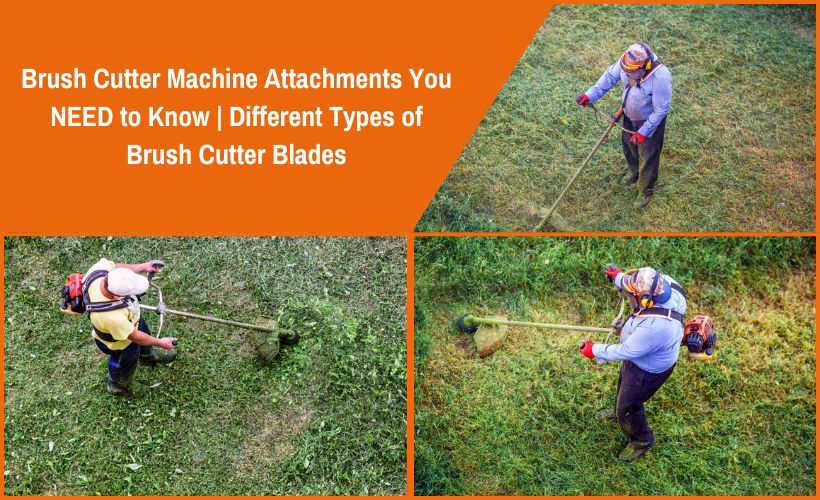
A brush cutter machine is a powerful tool for managing overgrown gardens, farms, and landscapes. It can easily tackle thick weeds, tall grass, and shrubs that regular trimmers can’t handle. The strength of a brush cutter lies in its versatility — by simply changing the attachments, it transforms into a multi-functional tool capable of handling everything from trimming to small-scale clearing.
Knowing which blade or attachment to use can help you save time, reduce effort, and achieve professional-quality results in less time.
Different Types of Brush Cutter Blades
The blade is the key to any electric brush cutter. Selecting the correct blade ensures both top performance and safe operation. Here are the main types and their best uses:
1. 2- and 3-Tooth Blades (Metal/Knife Blades)
Best for thick weeds and heavy grass. These blades are ideal for open areas where fibrous vegetation grows densely.
Best Use: Clearing tall weeds, dense grass, and light brush.
2. 4- and 8-Tooth Blades (Thicker Metal)
A great middle-ground option that works well on thicker, woody growth that lighter blades can’t manage.
Best Use: Removing brambles, brush, and saplings up to one inch thick.
3. 40- to 80-Tooth Blades (Circular Saw Blades – Tungsten Carbide Tipped – TCT)
These are designed for more serious jobs like cutting small trees and heavy woody stems.
Best Use: Small trees, thick saplings, and hard brush.
4. Flail/Mowing Heads
These flexible heads use pivoting metal or plastic flails that resist damage from rocks or debris.
Best Use: Rough, uneven ground or rocky terrain.
Popular Brush Cutter Attachments

Modern cutters can be fitted with multiple attachments to handle a wide range of outdoor tasks. Some of the most useful ones include:
- Weeder/Tiller Attachments: Convert your cutter into a mini tiller for weeding and soil aeration.
- Hedge Trimmer Attachments: Ideal for shaping shrubs and tall hedges.
- Chainsaw (Pole Saw) Attachments: Perfect for trimming high branches safely from the ground.
- Water Pump Attachments: Used for small-scale irrigation and draining tasks in farms especially models made by neptune industries known for durability and performance.
8 tips & tricks for you and your brushcutter, to save time, be more efficient and save your body.
- Adjust your harness properly so the head hovers just above the ground.
- Cut using the left side of the blade for smoother results.
- Operate at full throttle to reduce vibration and get clean cuts.
- Sweep from right to left to manage debris efficiently.
- For thick brush, cut in two passes top first, then base.
- Sharpen your blade regularly for faster and cleaner cuts.
- Check for rocks, wires, or debris before starting. rocks, wires, or debris before starting.
- Grease the gear head every 50 hours to extend its life.
Top 5 Brush Cutter Blades and Their Best Uses in Outdoor Maintenance
| Blade Type | Description | Best Use |
| 1. Nylon Trimmer Line Head | Thick nylon strands that spin fast. | Light grass and edges. |
| 2. 3-Tooth Metal Blade | Wide cutting points. | Dense grass and tall weeds. |
| 3. 8-Tooth Blade | Thicker metal design. | Woody weeds and brush. |
| 4. 40T/80T TCT Saw Blade | Circular saw-like blade. | Small trees and woody stems. |
| 5. Steel Wire Head | Twisted steel strands. | Removing weeds from pavement. |
Why a Grass Cutting Machine Manual Matters
A grass cutting machine manual is essential for understanding how to operate and maintain your equipment safely. It provides detailed instructions for assembling parts, using attachments, sharpening blades, and performing regular maintenance ensuring your cutter runs smoothly and lasts longer.
Conclusion
The right blade and attachment combination can completely transform your brush cutter machine into a reliable tool for every landscaping need. From trimming grass to pruning trees and light cultivation, each accessory helps you work smarter and more efficiently.
Backed by trusted brands like neptune industries, modern brush cutters are built for durability, comfort, and superior performance making outdoor maintenance easier than ever with the convenience of an electric brush cutter.
FAQ
Q1: What blade should I use with a brush cutter machine for thick weeds and small saplings?
A: When using a brush cutter machine for dense weeds and young woody growth, go for a 4- or 8-tooth metal blade, which offers a good balance between speed and durability. For thicker saplings (up to ~2-3 inches) or woody stems, use a 40T-80T TCT (tungsten-carbide tipped) circular saw blade. Always check manufacturer guidelines for compatibility.
Q2: How do I maintain and prolong the life of my electric brush cutter?
A: Maintenance of an electric brush cutter includes keeping blades sharp, cleaning the cutting head and motor area after use, ensuring the power source (battery or cord) is properly managed, and avoiding cutting wet or heavy material without inspection. Regularly check for loose bolts or damaged parts, and follow the user manual for lubrication or battery care.
Q3: What safety precautions should I follow when using a brush cutter?
A: Use proper personal protective equipment (gloves, eye protection, long pants, sturdy shoes), inspect the work area to remove debris or hidden obstacles, keep a safe distance from bystanders, use the correct harness or body support, and operate the cutter at full throttle when cutting (rather than feathering) to reduce kick-back and machine strain. Also, ensure you stop the machine, disconnect power/fuel, and let it cool before doing maintenance or refuelling.