Phone: 0731-3121900, Mob: 9229297668, 9826655552

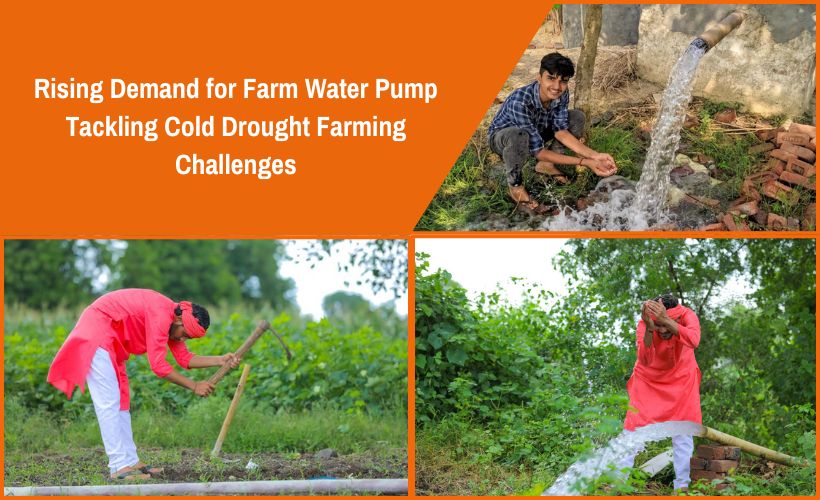
Modern agriculture demands resilience. With unpredictable weather patterns and increasingly severe climate conditions, farmers must rely on technologies that ensure stable crop growth all year round. One such indispensable tool is the farm water pump, a lifeline for irrigation, groundwater access, and climate-resilient farming.
Among emerging climate challenges, cold drought has become a serious threat. Unlike traditional summer droughts caused by heat and evaporation, cold drought occurs during late winter or early spring when frozen soil, reduced snowfall, and low stream flows limit water availability. This hidden crisis makes technology like a water pump for agriculture more essential than ever.
Why Water Pumps Are Crucial During Cold Drought
Cold drought creates moisture stress at a critical time right when crops need early irrigation and soil preparation. Relying on rainfall alone is no longer viable.
Water pumps help farmers overcome these challenges by enabling:
1. Timely and Controlled Irrigation
Pumps draw water from wells, ponds, or reservoirs, allowing farmers to irrigate fields even when surface moisture is extremely low.
2. Access to Deep Groundwater
As streams dry and soil remains frozen, submersible pumps help tap into deeper, stable water sources.
3. High Efficiency with Modern Systems
Integrated with drip lines, sprinklers, or smart irrigation controllers, pumps deliver precision watering—saving both water and energy.
The growing reliance on pump systems reflects a proactive and climate-smart farming approach designed to protect yield stability.
Diesel Water Pumps vs Electric and Solar Pumps: Cost and Efficiency Comparison

Choosing the right power source affects long-term costs, productivity, and maintenance. Here’s a clear breakdown:
| Feature | Diesel Water Pumps | Electric Water Pumps | Solar Water Pumps |
| Initial Cost | Low–Moderate | Moderate | High |
| Annual Operating Cost | Very High | Moderate | Negligible |
| Reliability/Portability | Highly Portable | Depends on grid stability | Excellent |
| Efficiency | Moderate | High | High |
| Environmental Impact | High | Moderate | Near-zero |
| Long-Term Value | Poor | Fair | Excellent |
Diesel Pumps
High power and highly portable, ideal for remote fields—but expensive to operate and environmentally unfriendly. For farmers with temporary setups, a diesel water pump for farming may be necessary but requires careful cost planning.
Electric Pumps
Strong efficiency and stable performance where grid power is reliable—but recurring electricity bills can be substantial.
Solar Pumps
Higher upfront investment but unmatched long-term value. Zero operating cost, long lifespan (25+ years), and government subsidies make them increasingly attractive for sustainable farming.
Neptune Water Pump Maintenance: 10 Steps to Ensure Reliable Operation
A well-maintained pump ensures reliability during droughts and extends equipment lifespan. Follow this essential routine for your neptune water pump:
1. Disconnect and Depressurize
Turn off the power and release pressure before any inspection or maintenance.
2. Perform a Visual Inspection
Check for cracks, dents, rust, leaks, or loose components.
3. Clean the Suction Strainer
A clogged strainer forces the pump to overwork and reduces efficiency.
4. Listen for Unusual Sounds
Grinding or rattling suggests bearing issues or impeller misalignment.
5. Check for Excessive Vibration
Vibrations point to alignment problems or loose mounting bolts.
6. Tighten All Connections
Secure every pipe, bolt, and connector to prevent air leaks and vibration.
7. Inspect and Replace Lubricants
For diesel pumps or lubricated electric models, regularly check and replace oil or grease as recommended.
8. Ensure Proper Ventilation
Clean debris around the pump and ensure good airflow, especially for diesel engines.
9. Winterize the Pump
Drain water before frost to prevent ice damage and casing cracks.
10. Refer to the User Manual
Every Neptune pump model has specific requirements—follow its official guidelines for lubrication, repair, and service intervals.
Conclusion
Investing in a farm water pump and maintaining it properly is more than a purchase; it’s an investment in long-term agricultural stability. As cold droughts, heatwaves, and unpredictable weather become the new norm, efficient pump technology equips farmers to secure reliable irrigation, protect yields, and sustain their farms year after year.
FAQs
Q1. Which water pump is best for agriculture during drought conditions?
Submersible and solar water pumps are considered the best for drought conditions. Submersible pumps can draw water from deep aquifers, while solar pumps provide reliable, zero-cost operation even when electricity or diesel is limited. Farmers often choose based on water depth, power availability, and long-term running cost.
Q2. How do I choose the right capacity for a farm water pump?
To choose the correct pump capacity, calculate three things:
- Water source depth (shallow, deep well, or surface water)
- Required discharge (LPM or HP) based on crop area
- Total head (vertical lift + pipe friction + horizontal distance)
A pump dealer or technician can help determine the exact HP and discharge needed for your farm size and water level.
Q3. How often should a water pump be serviced for best performance?
Most agricultural pumps should be serviced every 3 to 6 months, depending on usage. Regular maintenance includes cleaning the strainer, checking oil (for diesel models), tightening connections, inspecting seals, and ensuring there are no unusual vibrations or noise. Proper servicing extends pump life and prevents downtime during irrigation seasons.