Phone: 0731-3121900, Mob: 9229297668, 9826655552

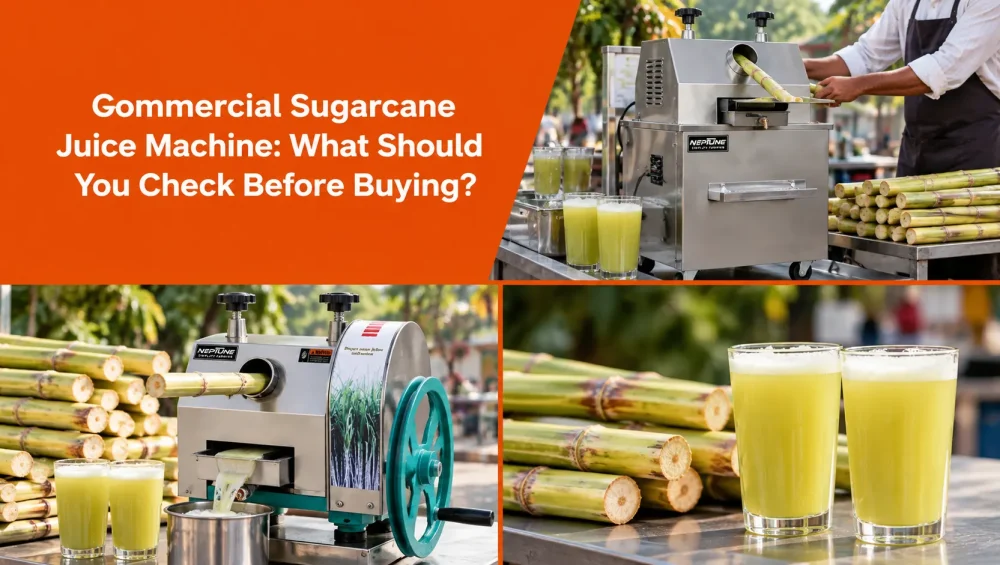
Fresh sugarcane juice is a popular and profitable product for juice shops, cafés, food courts, restaurants, and catering businesses. With strong customer demand and relatively low raw-material costs, a good automatic sugarcane juice machine can quickly become an important part of your business.
But choosing the right machine is important. A low-quality machine may give you poor juice recovery, consume more electricity, require frequent repairs, or create hygiene and safety problems.
Before you invest, here are the key things you should check.
1. Check the Machine’s Construction and Material
A commercial sugarcane juicer has to handle heavy pressure, moisture, sugarcane fibres, and continuous operation. That’s why the quality of the material matters.
Look for Food-Grade SS 304 Stainless Steel
Whenever possible, choose a machine made with SS 304 food-grade stainless steel, particularly for the parts that come into contact with the juice.
Good-quality stainless steel is easier to clean, more resistant to corrosion, and better suited for food-processing applications. Be cautious about machines that use low-grade metals or excessive plastic in critical areas.
Prefer an Enclosed Juicing Chamber
An enclosed pressing area provides an additional layer of hygiene by reducing exposure to dust, insects, and other contaminants.
It can also help reduce splashing while the machine is running, which makes the working area easier to keep clean.
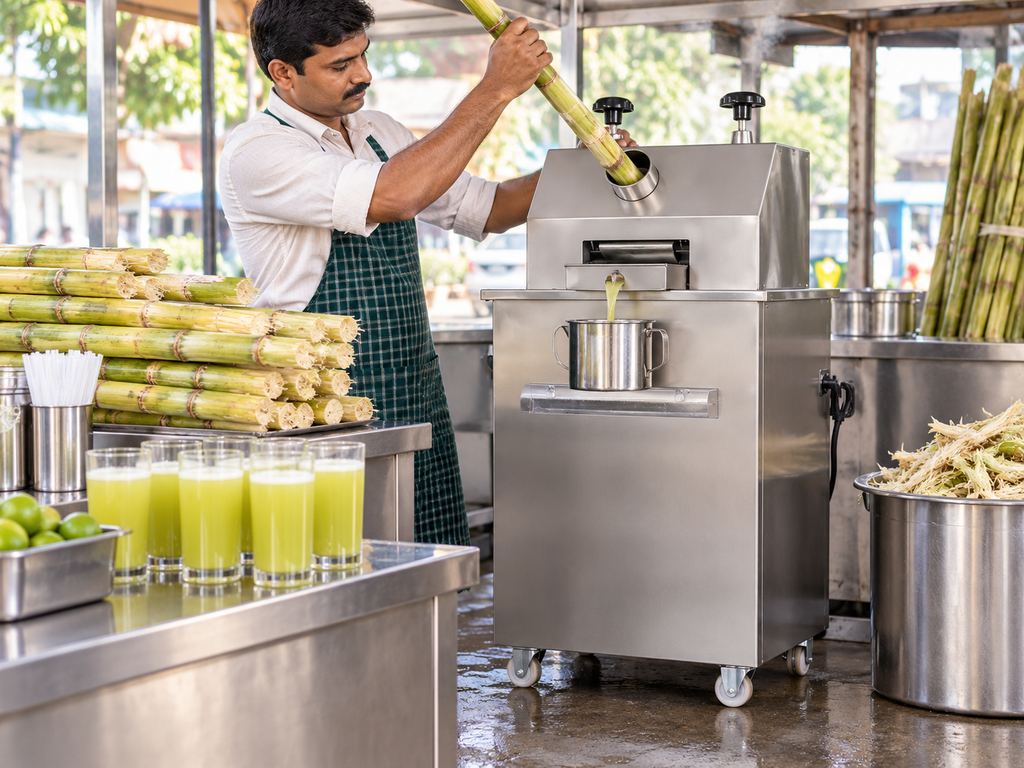
2. Look at the Roller System and Juice Recovery
One of the most important things to consider when choosing an electric sugarcane juice machine is how effectively it extracts juice from the sugarcane.
Every stalk that goes through the machine represents raw material you’ve already paid for. Better extraction means less juice is left behind in the bagasse.
Roller Configuration
Commercial machines commonly use multiple heavy-duty rollers to crush the cane efficiently. Depending on the machine design, a 3- or 4-roller system can provide good crushing performance and reduce the need to repeatedly feed the same cane through the machine.
Don’t Focus Only on the Claimed Extraction Percentage
Manufacturers may advertise extraction rates of 90%–95%, but actual performance can vary depending on the type and thickness of the sugarcane, moisture content, roller pressure, machine settings, and operating technique.
If possible, ask the manufacturer for a live demonstration and measure the actual juice output from a known quantity of cane. This gives you a much better idea of what the machine can really deliver.
3. Choose the Right Motor Power and Capacity
The motor is one of the most important components of a commercial Sugarcane juice making machine. The right motor depends largely on how much juice you expect to sell during your busiest hours.
As a general starting point:
| Business Type | Expected Footfall | Typical Motor Range | Approx. Output* |
| Small kiosk / café | Moderate | 0.5–1 HP | 80–120 L/hour |
| Juice bar / food court | High | 1.5–2 HP | 180–250 L/hour |
| Large catering / high-volume operation | Very high | Around 3 HP | 300+ L/hour |
*Actual output varies by machine design, cane quality, operator technique, and other conditions.
Don’t automatically choose the machine with the biggest motor. A higher-powered machine can cost more to purchase and operate. Instead, match the capacity to your expected workload.
Check the Gear Drive
A robust gear-driven system can provide the torque needed to handle thick and tough sugarcane.
Compared with simpler belt-driven arrangements, a properly designed gear system can be better suited to demanding commercial use. However, the quality of the gearbox and its maintenance requirements are just as important as the basic design.
4. Don’t Ignore Safety Features
Sugarcane juicers use powerful rollers that operate under considerable mechanical pressure. Safety should therefore be part of your buying checklist, not an afterthought.
Emergency Stop
An easily accessible emergency-stop button allows the operator to shut down the machine quickly if something goes wrong.
Reverse Function
A reverse switch is particularly useful when a piece of sugarcane becomes stuck. Instead of trying to remove it while the rollers are engaged, the operator can reverse the rollers and clear the blockage more safely.
Proper Safety Guards
Check the feeding area carefully. The opening should be designed so that the operator cannot easily reach the moving rollers.
If possible, ask the supplier to demonstrate how the machine handles a jam and how the operator is expected to clear it.
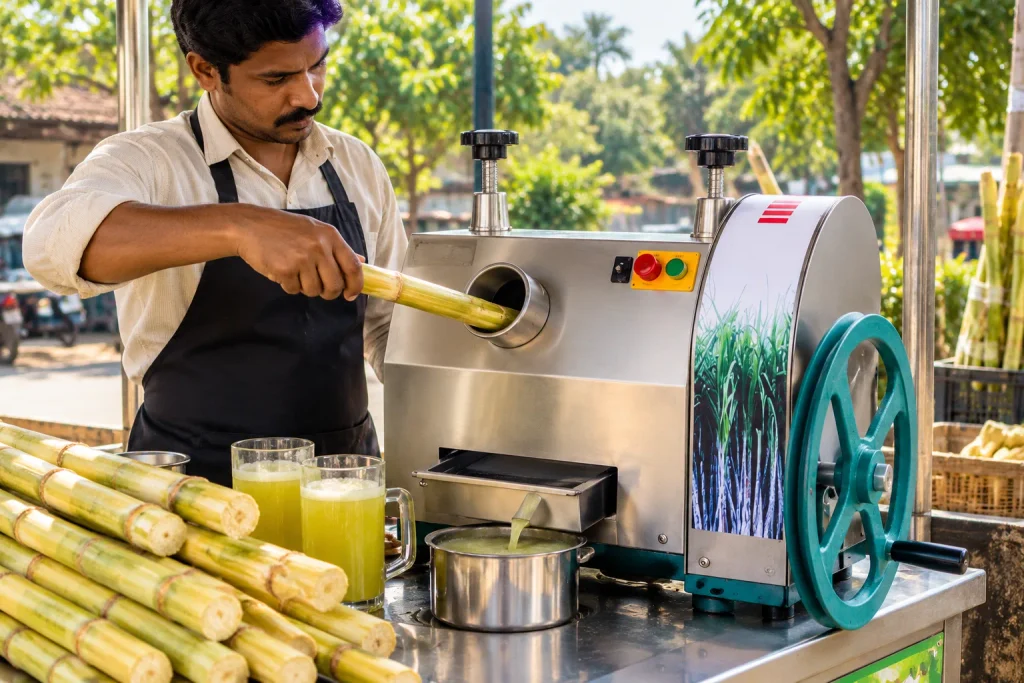
5. Think About Cleaning Before You Buy
Sugarcane juice contains natural sugars and fine fibres. If the machine isn’t cleaned properly after use, residue can build up and create unpleasant smells and hygiene problems.
A machine that takes 30 minutes to dismantle and clean every evening may become a headache in a busy shop.
Look for Easily Removable Parts
Juice trays, strainers, covers, and other components that come into contact with the juice should ideally be easy to remove and wash.
You shouldn’t need complicated tools or a lengthy procedure just to perform routine cleaning.
Check Drainage
A practical drainage system makes it much easier to rinse the machine after daily operation.
Also ask whether the manufacturer recommends any particular cleaning procedure or cleaning products.
Check the Bearings
Sealed or appropriately protected food-processing bearings can reduce maintenance requirements. More importantly, ask the manufacturer how lubrication is handled and make sure lubricants cannot contaminate the juice-contact areas.
6. Consider Space, Mobility, and Noise
Your available space and business model should also influence your choice.
Countertop or Floor-Standing?
A compact countertop unit can be a good fit for a small café or kiosk where space is limited.
For high-volume businesses, a larger floor-standing machine may be more practical, especially if it includes an integrated waste or bagasse collection area.
Do You Need Wheels?
If you’re planning to use the machine for catering, exhibitions, outdoor events, or temporary stalls, lockable caster wheels can make transportation and positioning much easier.
For a permanent shop, mobility may be less important.
Check the Noise Level
A noisy machine can quickly become irritating in a café, restaurant, or shopping mall.
If noise is important for your location, ask the manufacturer for the machine’s tested noise level rather than relying on phrases such as “silent” or “low noise.” A claimed figure such as under 65 dB should also be verified under the manufacturer’s stated test conditions.
7. Compare Warranty and After-Sales Support
Price shouldn’t be the only factor when comparing a commercial juice machine sugarcane solution.
A machine that costs less initially can become expensive if it frequently needs repairs or if replacement parts are difficult to find.
Before purchasing, ask:
- How long is the warranty?
- Does the warranty cover the motor and gearbox?
- Are spare parts readily available?
- How much do commonly replaced parts cost?
- Is service available in your city?
- What is the typical service response time?
- Does the manufacturer provide installation and operating guidance?
Ideally, choose a manufacturer that offers a clear warranty and reliable access to replacement parts such as seals, strainers, switches, bearings, and other wear components.
Final Thoughts
Buying a commercial sugarcane juice machine is not simply about finding the lowest price. You need a machine that can handle your expected workload, produce consistent juice, remain hygienic, and operate safely day after day.
Before making your final decision, pay particular attention to material quality, roller design, actual juice recovery, motor and gearbox specifications, safety features, cleaning requirements, machine size, noise, warranty, and spare-parts availability.
Most importantly, don’t rely solely on specifications written in a brochure. If possible, see the machine running and ask the supplier to demonstrate its actual juice extraction, capacity, cleaning process, and safety features.
The right machine should not just produce juice—it should fit smoothly into your daily operation and help you serve customers efficiently for years to come.
Frequently Asked Questions
1. What should I look for when buying a commercial sugarcane juice machine?
Look for a machine made from food-grade SS 304 stainless steel, with strong rollers, an efficient motor and gearbox, easy-to-clean components, proper safety features, and reliable after-sales support. You should also consider the machine’s juice extraction rate and capacity based on your expected daily sales.
2. How much motor power is suitable for a commercial sugarcane juice machine?
The required motor power depends on your business volume. Smaller cafés and kiosks may work well with around 0.5–1 HP, while busy juice shops and food courts may need 1.5–2 HP or more. High-volume commercial operations may require around 3 HP. Always compare the motor power with the machine’s actual output capacity.
3. How do I maintain a sugarcane juice machine?
Clean the juice-contacting parts thoroughly after every day’s operation and remove sugarcane fibres and residue from the rollers, trays, strainers, and pressing area. Check the machine regularly for loose parts, worn components, and unusual sounds. Following the manufacturer’s cleaning and maintenance instructions will help improve hygiene and extend the machine’s working life.