 Phone: 0731-3121900, Mob: 9229297668, 9826655552
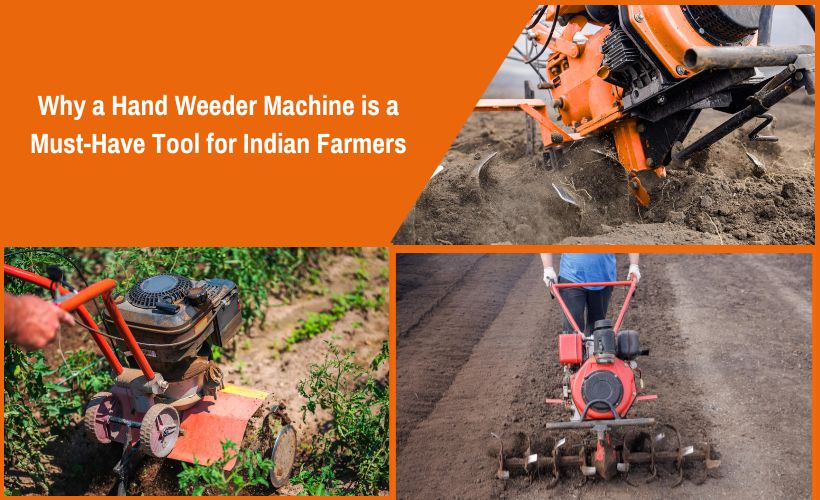
For generations, the backbone of Indian agriculture has been the hard-working farmer, often seen bent over in the scorching sun, meticulously pulling weeds by hand. But as we move further into 2026, the landscape of Indian farming is rapidly evolving. With labor becoming more expensive and harder to find during peak seasons, mechanization is no longer a luxury, it’s a necessity.Enter the hand weeder machine, often referred to as a power weeder. This compact, versatile tool is revolutionizing how small and marginal farmers manage their land. Alongside machines like the Paddy reaper, modern farming equipment is helping farmers boost productivity and reduce dependency on manual labor.
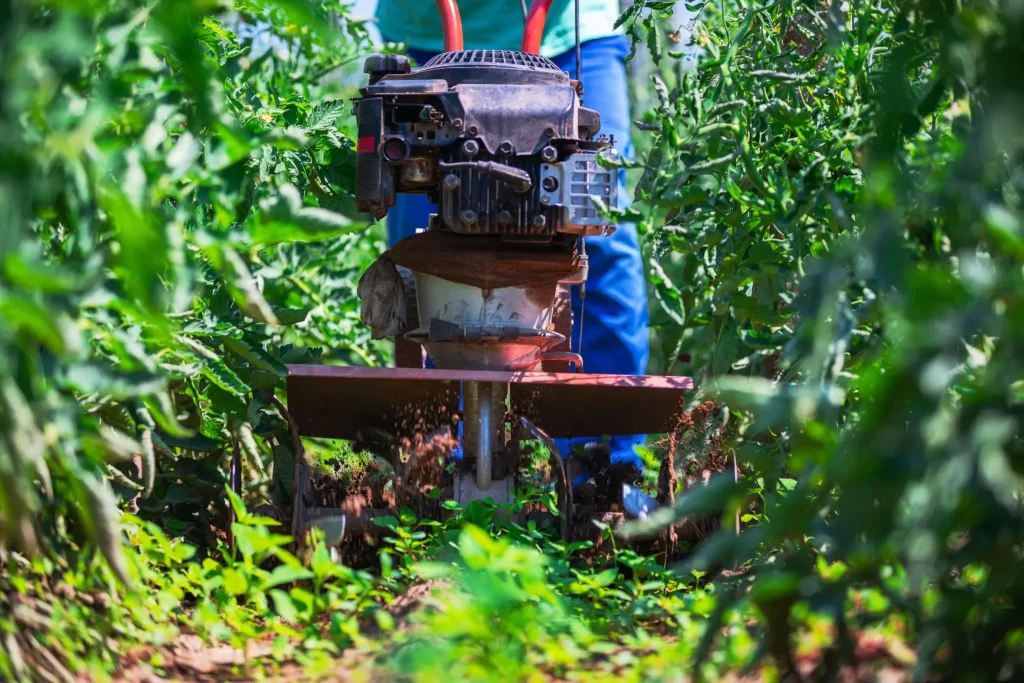
Power Weeders vs. Manual Weeding: The Cost and Time Benefits for Farmers
1. Massive Time Savings
Manual weeding is an exhausting and slow process. Typically, weeding one acre of land requires 8 to 12 labor days depending on the crop.
In contrast, an agricultural power weeder can complete the same task up to 10 times faster. What used to take days now takes only a few hours, especially during peak seasons like Kharif.
2. Significant Cost Reduction
Let’s look at the economics:
- Manual Weeding: ₹13,000–₹18,000 per acre per season
- Power Weeder: ₹120–₹150 per hour operational cost
Over time, investing in such machinery becomes highly cost-effective. Similarly, tools like a paddy reaper price range make harvesting faster and reduce overall labor expenses, improving farm profitability.
3. Better Soil Health and Higher Yield
Manual weeding removes only surface-level weeds. However, power weeders go deeper by loosening the soil. Their rotating blades:
- Improve soil aeration
Enhance water absorption - Allow better nutrient flow to crops
This results in stronger plant growth and higher yields.
Key Benefits for Indian Farmers
1.Compact and Easy to Use
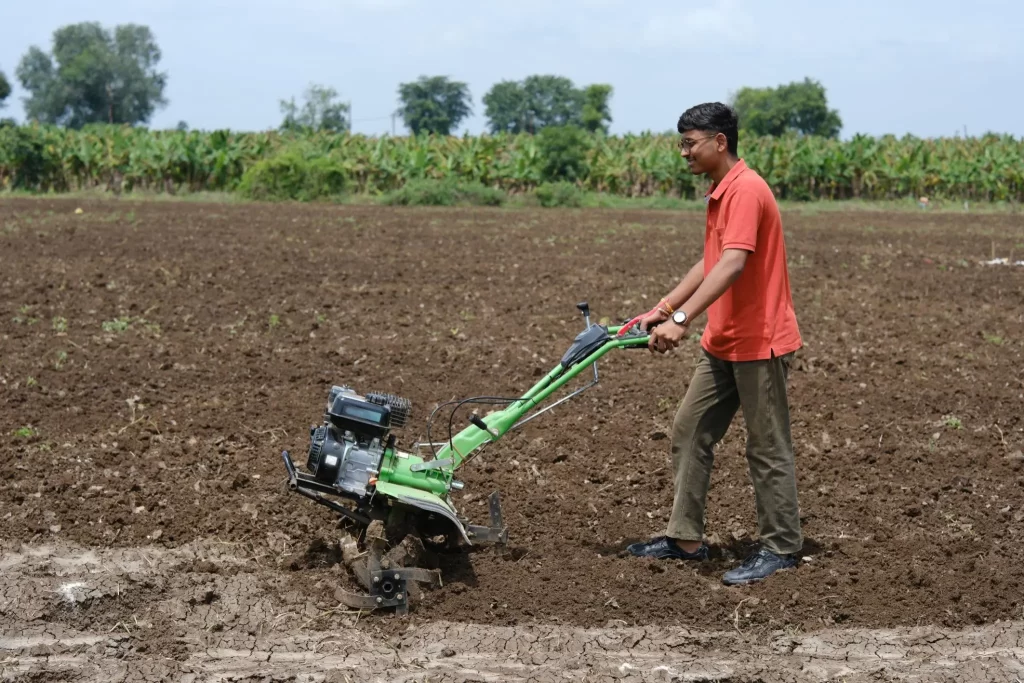
Most Indian farms are small or medium-sized. A hand-operated weeder is lightweight and can easily move through narrow crop rows, making it perfect for vegetables, sugarcane, and cotton.
2.Multi-Purpose Utility
Modern weeders are not limited to weed removal. They can also perform:
- Tilling
- Ridging
- Ditching
This multi-functionality makes them a valuable all-in-one farming solution.
3.Overcoming Labor Shortage
With increasing migration to cities, labor shortages have become a serious concern. Owning a weeder ensures that farmers can work independently without relying on seasonal labor availability.
4.Government Subsidies Make It Affordable
The Indian government supports farm mechanization through schemes like SMAM:
- General farmers: Up to 40% subsidy
- Small/SC/ST farmers: Up to 50% subsidy
This makes adopting machines like a power weeder much more affordable.
Comparison Table: Manual vs Machine
| Feature | Manual Weeding | Power Weeder Machine |
| Time (per acre) | 2–3 Days | 3–5 Hours |
| Labor Requirement | High | Very Low |
| Physical Effort | Extreme | Minimal |
| Soil Aeration | Minimal | Excellent |
| Long-term Cost | Increasing | Decreasing |
Final Thoughts
For Indian farmers aiming to increase profitability in 2026, investing in a hand weeder machine is a smart move. It not only saves time and labor costs but also improves soil health and crop yield.
Combined with other modern tools like reapers and harvesters, farmers can transition toward efficient, technology-driven agriculture. The future belongs to those who adopt smart farming practices today.
FAQ
1. What is a hand weeder machine and how does it work?
A hand weeder machine is a compact farming tool designed to remove weeds and loosen soil using rotating blades. It works by cutting weeds from the root while simultaneously aerating the soil, which improves crop growth and reduces manual labor.
2. What is the average agricultural power weeder price in India?
The agricultural power weeder price in India typically starts from ₹20,000 and can go up to ₹80,000 depending on engine capacity, features, and brand. Government subsidies can further reduce the cost for eligible farmers.
3. What is the paddy reaper price and is it worth buying?
The paddy reaper price in India generally ranges between ₹50,000 and ₹1,50,000. It is worth buying for farmers with paddy cultivation as it significantly reduces harvesting time, labor costs, and crop losses.