Phone: 0731-3121900, Mob: 9229297668, 9826655552


A bold Cold fogging machine is widely used today for professional disinfection and pest control. These machines, often categorised as Ultra-Low Volume (ULV) foggers, operate without heat. Instead of producing vapor through thermal energy, they rely on a mechanical system that combines three main components: the tank, the pump, and the airflow system. Together, these parts create a fine mist that spreads evenly across large areas and hard-to-reach surfaces.
The Tank: The Chemical Reservoir
The tank in a fogging machine is more than just a storage container for the chemical solution. In high-quality machines, the tank is built from durable materials such as high-density polyethene (HDPE), which is resistant to corrosive disinfectants and pesticides.
Another important feature of the tank is its internal design. A well-engineered tank reduces what is known as dead volume, meaning the leftover liquid that the machine cannot draw out. Efficient tanks ensure that nearly all the solution inside is used during operation, maintaining a consistent output until the tank is almost empty.
The Pump: The Heart of the Machine
The pump is responsible for moving the liquid from the tank toward the nozzle. It controls the pressure and ensures that the liquid flows smoothly through the system. In ULV foggers, maintaining stable pressure is critical because any variation can cause the fog output to become inconsistent.
There are two common pump mechanisms used in fogging systems:
Direct Liquid Displacement
In this system, the pump directly pushes the liquid from the tank to the nozzle.
Pressure-Fed System
Here, the tank is pressurised by a pump or compressor, forcing the liquid through a delivery tube toward the nozzle.
Both systems are designed to maintain a steady flow that helps produce uniform droplets during fogging.
The Airflow System: Turning Liquid Into Fog
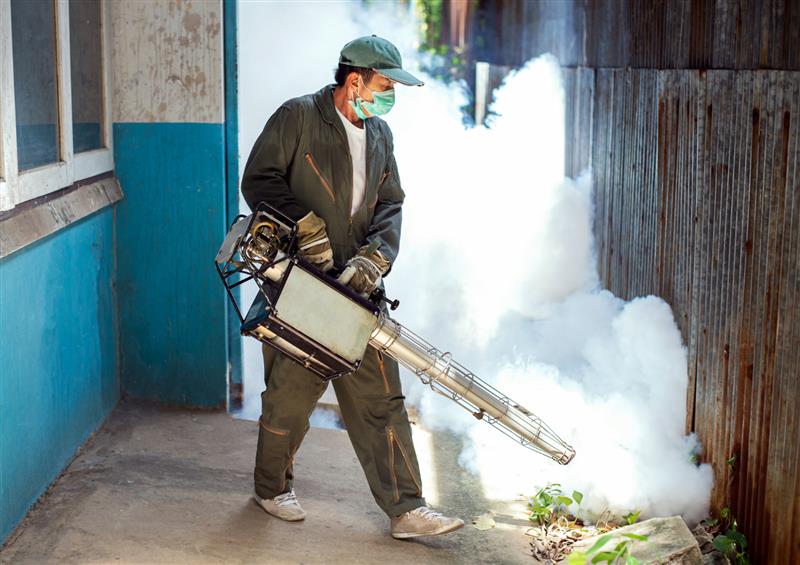
The airflow system is where the transformation from liquid to fog actually occurs. A powerful motor and fan generate a strong stream of air that breaks the liquid into extremely small droplets through a process called atomization.
When the liquid exits the nozzle, it meets the high-velocity air stream. This interaction tears the liquid into microscopic droplets, creating the fog effect. Because this process does not involve heat, the chemical composition of disinfectants remains stable and effective when it reaches the target surfaces.
How Droplet Size Affects Fogging Machine Efficiency
Droplet size plays a major role in determining the performance of a fogging machine. Droplets are measured in microns (μm), and to understand their scale, a human hair is approximately 70 microns thick.
Hang Time in the Air
The smaller the droplets, the longer they can stay suspended in the air.
Large droplets (above 50 μm) fall quickly due to gravity and mostly wet floors and top surfaces.
ULV droplets (5–20 μm) are light enough to remain airborne for extended periods—sometimes up to 45 minutes. This longer “hang time” allows the fog to travel through ventilation spaces, corners, and hidden crevices that are difficult to clean manually.
Surface Coverage and Wrapping Effect
Smaller droplets also improve coverage. When a small quantity of liquid is divided into thousands of microscopic droplets, the total surface area increases significantly. This allows the same amount of disinfectant to cover a much larger space.
These fine droplets also move with air currents and can circulate objects. This effect allows the fog to reach the back of equipment, the underside of furniture, and other areas that traditional spraying methods may miss.
Improved Chemical Efficiency
Using the correct droplet size—typically between 10 and 30 microns for indoor disinfection—offers several advantages:
- Prevents excessive wetting or chemical pooling
- Protects sensitive items such as electronics or wooden furniture
- Reduces chemical wastage
- Decreases the need for manual spraying
| Droplet Size (μm) | Classification | Common Use Case |
| <10 | Dry Fog | Cleanrooms, sensitive electronics |
| 10–30 | ULV Fine Mist | Indoor disinfection, odor control |
| 30–60 | Fine Spray | Outdoor pest control, plant misting |
| >80 | Coarse Spray | Traditional sprayers |
Conclusion
The performance of a fogging machine depends on the seamless coordination between its tank, pump, and airflow system. When these components function together properly, they produce consistent droplet sizes that maximise coverage and disinfection efficiency.
For businesses and facility managers looking to invest in fogging technology, understanding the working mechanism can help them make informed decisions when comparing fogging machine price india options and selecting the right fogging machine models for their specific needs.
FAQ
1. What is a cold fogging machine used for?
A cold fogging machine is mainly used for disinfection, pest control, and odour removal in indoor and outdoor environments. It produces ultra-fine droplets that remain suspended in the air, allowing the disinfectant or pesticide to reach hidden areas such as corners, vents, and under furniture.
2. What is the average fogging machine price in India?
The fogging machine price india can vary depending on the type, capacity, and brand. Basic portable foggers may start around ₹3,000–₹5,000, while advanced ULV foggers with higher output and larger tanks can cost ₹10,000–₹40,000 or more.
3. How do I choose the right fogging machine in India?
When selecting a fogging machine india, consider factors such as tank capacity, droplet size range, airflow power, and intended usage (indoor disinfection, pest control, or agriculture). Choosing a machine that produces consistent ULV droplets ensures better coverage and more effective results.