Phone: 0731-3121900, Mob: 9229297668, 9826655552


In the modern agricultural landscape of 2026, efficiency is no longer optional—it is the key factor that determines whether a farmer earns a profit or faces losses. For small and medium-scale farmers, the agricultural power weeder has transformed from a basic soil-tilling machine into a multi-purpose farming tool.
With the help of different attachments, a single machine can now perform multiple tasks such as land preparation, weed control, sowing, and even harvesting. This versatility reduces equipment costs while increasing productivity on the farm.
In this guide, we explore the most useful attachments for power weeders and explain how cutter bar size influences the price and performance of paddy reapers.
Essential Attachments for Agricultural Power Weeder Machines
The real strength of a power weeder lies in the attachments that expand its functionality. By adding the right implements, farmers can perform several agricultural operations with a single machine.
Cultivators & Tillers
Cultivators are commonly used for soil aeration and removing weeds between crop rows. These tools also function effectively as a weed cutter machine, helping farmers manage unwanted plant growth and maintain healthier crop fields.
Adjustable Ridgers
Ridges are ideal for crops like potatoes, sugarcane, and turmeric. They create well-formed ridges and furrows that improve water flow and support proper root development.
Ploughs (Single & Reversible)
Plough attachments are essential for primary land preparation. They break hard soil layers and mix organic matter into the soil, improving fertility.
Paddy / Iron Wheels
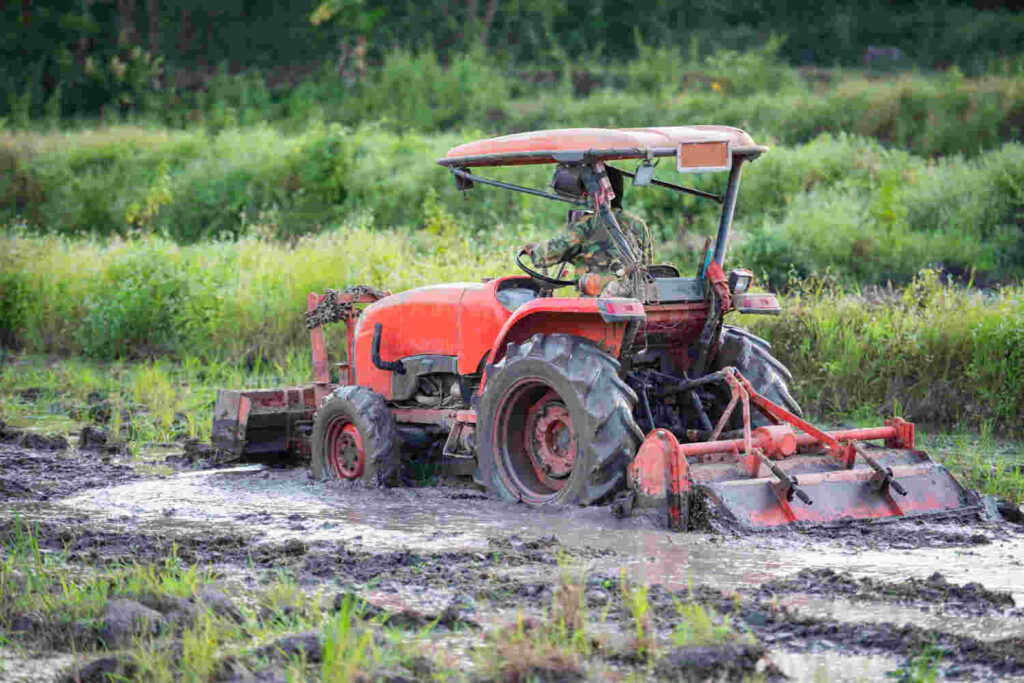
Working in muddy paddy fields can be challenging. Iron wheels provide better traction compared to rubber tires, preventing the machine from slipping in wet soil.
Water Pump & Sprayer Attachments
These attachments allow farmers to use the same engine for irrigation pumps or spraying operations, eliminating the need for separate equipment.
Seed-cum-Fertilizer Drills
This attachment enables farmers to sow seeds and apply fertilizers simultaneously, ensuring uniform crop growth and saving time and labor.
How Cutter Bar Size Affects Paddy Reaper Price and Harvesting Speed
The cutter bar is the most critical component of paddy harvesting machines. Its width significantly influences both performance and paddy reaper price in the market.
Material and Manufacturing Cost
A larger cutter bar requires more steel and additional cutting blades, which increases production costs. For example, a 3-foot cutter bar attachment may cost between ₹40,000 and ₹50,000, while a heavy-duty 4.5- or 5-foot model can reach prices up to ₹1,45,000 for self-propelled units.
Engine and Transmission Requirements
Wider cutter bars require stronger engines to function efficiently. Machines with cutter bars above 4 feet usually need a 7 HP or 9 HP engine and a stronger gear-driven transmission system.
Precision Engineering
Advanced harvesting machines such as Paddy reaper often incorporate double cutter bar mechanisms to ensure a clean and uniform cut across the entire width, reducing grain loss during harvesting.
The Impact of Cutter Bar Size on Harvesting Speed
Harvesting efficiency is directly linked to cutter bar width because it determines how much crop can be cut in a single pass.
| Cutter Bar Width | Average Harvesting Speed | Best Suited For |
| 3 Feet | 0.3 – 0.4 Acre/Hour | Small plots & hilly terrain |
| 4 Feet | 0.5 – 0.6 Acre/Hour | Medium-sized fields |
| 5 Feet | 0.8 – 1.0 Acre/Hour | Large open farms |
Coverage vs. Maneuverability
A wider cutter bar can harvest larger areas quickly. However, it requires more turning space. Farmers with smaller or irregular land plots often prefer smaller cutter bars because they allow easier maneuvering in tight areas.
Speed vs. Grain Loss
Trying to increase harvesting speed with a smaller cutter bar can lead to grain losses. Agricultural research suggests that the ideal harvesting speed usually ranges between 2.5 and 3.8 km/h. Using a wider cutter bar allows farmers to maintain this optimal speed while covering more land.
Conclusion
Power weeders have become one of the most valuable machines for modern small-scale farming. With the right attachments, farmers can perform multiple operations from soil preparation to crop harvesting using a single piece of equipment.
Choosing the right cutter bar size depends on farm size and crop conditions. For many small and medium farms, a 7 HP power weeder paired with a 4-foot reaper attachment offers the perfect balance between performance, affordability, and efficiency.
FAQs
1. What is the ideal power weeder for small farms?
A 5–7 HP power weeder is suitable for small farms because it can support multiple attachments and handle different field operations efficiently.
2. Which cutter bar size is best for paddy harvesting?
A 4-foot cutter bar is generally considered the best option for small to medium farms because it balances speed and manoeuvrability.
3. How does cutter bar size affect harvesting productivity?
Larger cutter bars cover more crop in a single pass, which increases harvesting speed and reduces overall field time.