 Phone: 0731-3121900, Mob: 9229297668, 9826655552

An HTP (Horizontal Triplex Plunger) power sprayer is one of the most dependable machines used in modern agriculture, landscaping, and pest control. Designed to deliver consistent high-pressure output, it ensures uniform spraying of pesticides, herbicides, fertilizers, and disinfectants over large areas. A high pressure HTP sprayer is built to perform demanding tasks efficiently, but like any hardworking machine, it requires regular maintenance to continue delivering reliable results.
Ignoring routine maintenance can lead to reduced pressure, uneven spraying, higher fuel consumption, and expensive repairs. Fortunately, maintaining your sprayer does not require advanced mechanical skills. By following a few simple maintenance practices, you can improve efficiency, reduce downtime, and significantly extend the life of your equipment.
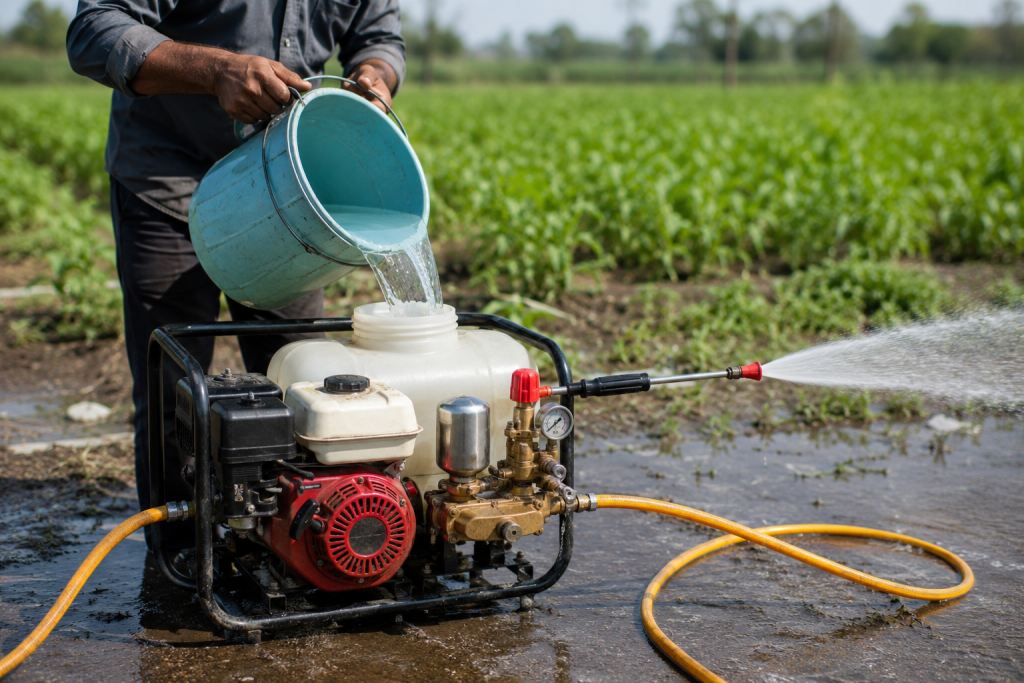
1. Flush the Sprayer After Every Use
The most important maintenance step is cleaning the sprayer immediately after every spraying session. Chemicals left inside the pump or hoses can harden, crystallize, or corrode internal components, leading to poor performance.
How to Flush the System
- Empty any leftover chemical solution from the tank.
- Fill the tank with clean water.
- Run the sprayer for two to three minutes.
- Allow clean water to pass through the pump, hoses, spray lance, and nozzle.
If you have used oil-based chemicals or strong pesticides, add a mild detergent or pump cleaner during flushing and finish with a clean water rinse.
Regular cleaning prevents chemical buildup and keeps the entire spraying system functioning smoothly.
2. Check the Pump Oil Regularly
The crankcase of an HTP pump depends on clean oil to lubricate moving parts and reduce friction. Operating with dirty or insufficient oil can damage pistons, bearings, and connecting rods.
Oil Maintenance Tips
- Check the oil level before starting work.
- Ensure the oil reaches the center of the sight glass.
- Replace the oil if it appears cloudy or milky, as this indicates water contamination.
- Change the oil after the first 10–20 hours of use for a new pump and every 50–100 operating hours afterward.
Always use the oil grade recommended by the manufacturer for optimum performance.
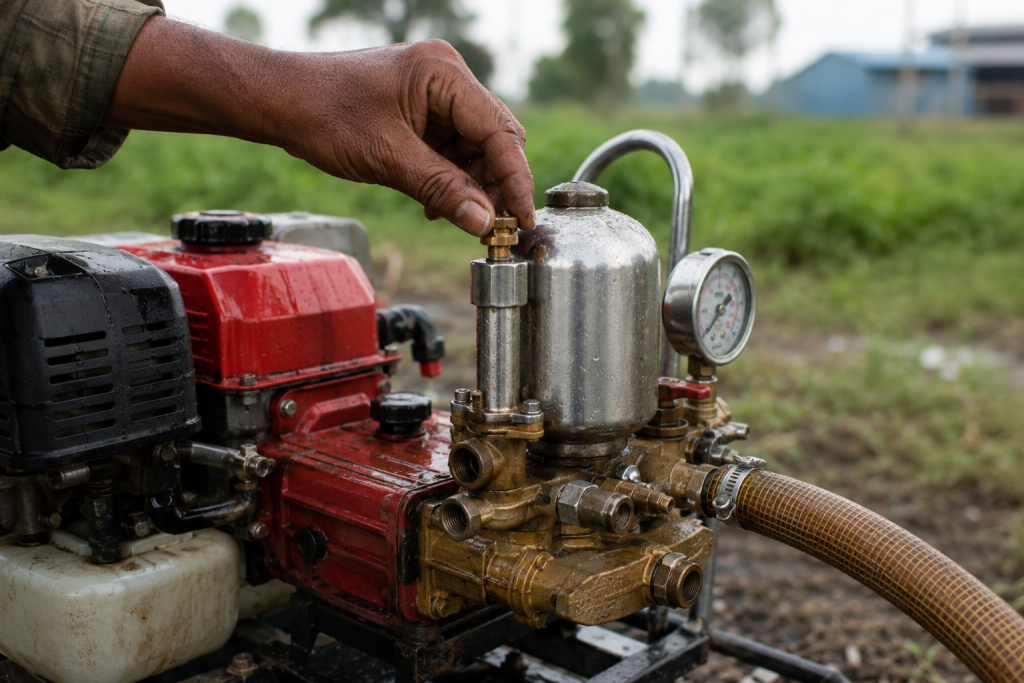
3. Lubricate the Pressure Packings
Pressure packings create a leak-proof seal around the plungers while maintaining consistent operating pressure. Without proper lubrication, they wear out quickly and may begin leaking.
Most HTP pumps include grease cups positioned above the plungers.
Best Practices
- Tighten the grease cups slightly every 4–5 hours of operation.
- Refill them periodically with water-resistant grease.
- Replace worn or damaged packings before leakage becomes severe.
Routine lubrication minimizes friction and helps maintain stable spraying pressure.
4. Clean the Suction Filter
The suction strainer protects the pump from dirt, sand, and debris that could damage internal components.
A clogged filter restricts water flow and causes pressure loss, while damaged screens allow contaminants to enter the pump.
Cleaning Checklist
- Remove and inspect the filter before every spraying session.
- Wash away dirt, algae, and chemical deposits.
- Replace torn or damaged screens immediately.
Keeping the suction filter clean also helps prevent cavitation, a condition that can permanently damage pump components.
5. Inspect Valves and Pressure Regulator
If the sprayer fails to maintain pressure or the pressure gauge fluctuates continuously, inspect the suction valves, delivery valves, and pressure regulator.
Look for:
- Broken valve springs
- Dirt or chemical deposits
- Damaged valve seats
- Worn regulator components
The pressure adjustment knob should rotate smoothly and respond immediately during operation. After each use, reduce the pressure to zero before storing the machine to reduce stress on the regulator spring.
6. Check Hoses, Nozzles, and Connections
High-pressure hoses and fittings experience constant vibration and pressure during operation. Even a small leak can reduce spraying efficiency and waste chemicals.
Inspect the following regularly:
- Hose clamps
- Pipe joints
- Spray gun fittings
- Quick connectors
- Spray nozzles
Replace cracked hoses or damaged nozzles immediately to maintain consistent spray coverage.
7. Tighten Nuts and Bolts
Continuous vibration can loosen mounting bolts over time.
Before beginning work, inspect:
- Pump mounting bolts
- Engine mounting hardware
- Belt guards
- Pulley alignment
- Frame fasteners
Proper tightening improves safety and reduces unnecessary wear on the machine.
8. Store the Sprayer Properly
Proper storage protects your investment during long periods of inactivity.
Storage Tips
- Drain all remaining water from the pump and hoses.
- Disconnect accessories before storage.
- Store the sprayer in a dry, covered location away from direct sunlight.
- During winter or freezing temperatures, circulate eco-friendly antifreeze through the pump to protect internal components.
- Cover the machine to prevent dust accumulation.
Good storage practices help prevent rust, cracked pump housings, and dried-out seals.
9. Follow a Preventive Maintenance Schedule
Preventive maintenance helps identify minor issues before they become costly repairs.
Daily
- Flush the sprayer
- Check oil level
- Clean the suction filter
- Inspect hoses
Weekly
- Lubricate grease cups
- Tighten loose bolts
- Check pressure regulator
Monthly
- Inspect valves
- Replace worn seals if necessary
- Change pump oil based on operating hours
Following a regular maintenance schedule keeps the sprayer operating at peak efficiency throughout the season.
Why Regular Maintenance Matters For HTP Power Sprayer
Whether you’re using an HTP power sprayer machine for farming, landscaping, or pest control, proper servicing improves spraying accuracy, reduces operating costs, and extends equipment life. Consistent maintenance also ensures reliable pressure and minimizes unexpected downtime during critical spraying periods.
For professionals relying on an HTP sprayer for agriculture, preventive care helps achieve better crop protection through even chemical application while reducing wear on expensive pump components.
If you’re planning to upgrade your equipment, it’s wise to compare features, build quality, warranty, and after-sales support before choosing an HTP sprayer for agriculture buy online. Investing in a quality machine and maintaining it properly ensures dependable performance for years.
Conclusion
An HTP power sprayer is a long-term investment, and regular maintenance is the key to getting the best return from it. Simple tasks such as flushing the system after every use, monitoring oil levels, cleaning filters, lubricating pressure packings, inspecting valves, and storing the machine correctly can dramatically improve its efficiency and lifespan.
By dedicating just a few minutes to routine maintenance after every spraying session, you can prevent costly repairs, maintain consistent spraying performance, and keep your HTP power sprayer operating at its best season after season.
Frequently Asked Questions
1. How often should I service an HTP power sprayer?
An HTP power sprayer should be cleaned after every use, while the pump oil should be checked before each operation and replaced every 50–100 operating hours or as recommended by the manufacturer. Regular servicing helps maintain pressure, improves efficiency, and extends the machine’s lifespan.
2. Why is my HTP power sprayer losing pressure?
A drop in pressure is usually caused by a clogged suction filter, worn-out pressure packings, damaged valves, air leaks in the suction line, or a faulty pressure regulator. Inspecting and maintaining these components regularly can restore optimal spraying performance.
3. How can I increase the lifespan of my HTP power sprayer?
To maximize the lifespan of your HTP power sprayer, flush the system with clean water after every use, keep the pump properly lubricated, clean the suction filter regularly, inspect hoses and seals for wear, change the pump oil on schedule, and store the machine in a dry, protected location during the off-season. These practices help prevent costly repairs and ensure reliable performance for years.