 Phone: 0731-3121900, Mob: 9229297668, 9826655552
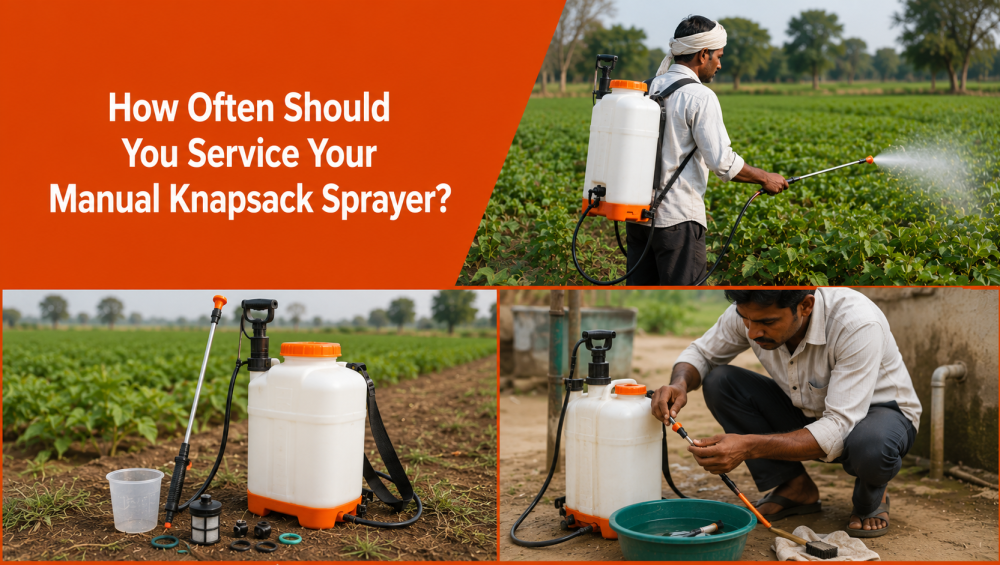
A manual knapsack sprayer is an essential tool for farmers, gardeners, and landscapers who need an efficient way to apply pesticides, herbicides, fungicides, and liquid fertilizers. While these sprayers are known for their simplicity and durability, they still require regular maintenance to perform at their best. Ignoring routine servicing can lead to clogged nozzles, pressure loss, chemical wastage, and expensive repairs.
The good news is that maintaining a knapsack sprayer is neither difficult nor time-consuming. By following a simple service schedule after every use, during the spraying season, and before long-term storage, you can improve spraying efficiency and significantly extend the life of your equipment.
Clean Your Sprayer After Every Use
Recommended Frequency: After every spraying session
The first and most important maintenance step is cleaning your sprayer immediately after use. Leaving chemical residue inside the tank, hose, or nozzle allows deposits to build up, which can damage internal parts and reduce spraying performance.
Daily Cleaning Checklist
- Empty any remaining chemical solution safely according to local guidelines.
- Fill the tank with clean water.
- Pump the handle and flush water through the hose, spray lance, and nozzle for two to three minutes.
- Wash the exterior of the tank to remove chemical residue.
- Allow the sprayer to dry completely before storing it.
Benefits of Daily Cleaning
Regular cleaning helps you:
- Prevent clogged nozzles.
- Reduce chemical contamination between applications.
- Protect seals and pump components.
- Maintain a consistent spray pattern.
- Increase the overall lifespan of the sprayer.
Spending just a few minutes cleaning after each use can prevent major maintenance issues later.

Perform a Mid-Season Inspection
Recommended Frequency: Every 2–3 months or after around 50 hours of use
If you regularly use a hand operated knapsack sprayer, a detailed inspection during the growing season is highly recommended. Regular checks help identify worn parts before they affect pressure, spray quality, or application accuracy.
Inspect the Nozzle
The nozzle controls the spray pattern and application rate. Continuous use, especially with abrasive formulations, can enlarge the nozzle opening and lead to uneven chemical distribution.
Replace worn nozzles whenever necessary to maintain proper coverage.
Clean the Filters
Most knapsack sprayers include filters inside the tank and spray handle to stop dirt from reaching the nozzle.
Remove these filters carefully and clean them using fresh water and a soft brush before reinstalling them.
Examine the Hose
Inspect the hose for:
- Cracks
- Kinks
- Loose connections
- Brittle rubber
- Signs of leakage
Replacing damaged hoses early helps maintain consistent pressure and prevents unexpected failures during spraying.
Schedule an Annual Deep Service
Recommended Frequency: Once every year
An annual overhaul is one of the best ways to keep your sprayer performing like new. Over time, the rubber O-rings, seals, valves, and gaskets inside the pump naturally wear out and lose their ability to maintain pressure.
If you notice yourself pumping more frequently than usual to maintain a steady spray, it’s often a sign that the internal seals need attention.
Annual Maintenance Checklist
- Disassemble the pump assembly.
- Inspect piston or diaphragm components.
- Check all O-rings, gaskets, and washers.
- Replace cracked or hardened rubber parts.
- Lubricate moving rubber seals using 100% silicone grease.
- Reassemble and test the sprayer before use.
Using an original service kit from the manufacturer ensures proper fitting and long-lasting performance.
Use the Right Lubricant
Choosing the correct lubricant is just as important as replacing worn parts.
Never use petroleum-based products such as motor oil or standard WD-40 on rubber seals. These products can cause swelling, cracking, and premature deterioration of the rubber components.
Instead, use silicone grease specifically designed for rubber seals. It protects moving parts, improves sealing efficiency, and extends the life of the pump.
Prepare Your Sprayer for Long-Term Storage
Recommended Frequency: Before winter or extended storage
Proper storage prevents unnecessary damage when the sprayer is not being used for several weeks or months.
Water trapped inside the pump or spray lance can freeze during cold weather, causing cracks and internal damage.
Storage Tips
- Empty the tank completely.
- Flush the entire system with clean water.
- Pump until only air exits the nozzle.
- Run a small amount of non-toxic RV antifreeze through the system if freezing temperatures are expected.
- Store the sprayer upside down with the tank cap open to allow any remaining moisture to evaporate.
Following these simple steps helps ensure your sprayer is ready for the next season.
Is It Better to Repair or Replace?
Routine servicing is much more affordable than buying a new sprayer. Most manufacturers offer economical seal kits that include replacement valves, O-rings, and gaskets for restoring performance.
However, if your sprayer has extensive damage, severe corrosion, or recurring pressure issues, it may be time to consider a manual spray pump buy option. Choosing a quality replacement with readily available spare parts can save both time and maintenance costs in the long run.
Final Thoughts
Regular maintenance keeps your sprayer operating efficiently while reducing downtime and repair expenses. Whether you use it occasionally in your garden or daily on a farm, following a simple maintenance routine ensures better spray coverage, improved safety, and longer equipment life.
Even a manual water spray pump can deliver excellent performance for many years when it is cleaned after every use, inspected during the season, serviced annually, and stored correctly. Investing a little time in preventive maintenance today will help you achieve more reliable spraying results and better value from your equipment for years to come.
Frequently Asked Questions (FAQs)
1. How often should I service my manual knapsack sprayer?
You should rinse and clean your manual knapsack sprayer after every use to prevent chemical buildup. Perform a detailed inspection every 2–3 months or after about 50 hours of use, and schedule a complete service once a year by checking seals, valves, and O-rings to maintain optimal performance.
2. Why is my manual knapsack sprayer losing pressure?
A manual knapsack sprayer may lose pressure due to worn-out O-rings, damaged pump seals, clogged nozzles, blocked filters, or leaking hoses. Regular cleaning, lubrication with silicone grease, and timely replacement of worn components can restore proper pressure and spraying efficiency.
3. How can I increase the lifespan of my manual knapsack sprayer?
To extend the life of your manual knapsack sprayer, always clean it immediately after use, inspect the nozzle and filters regularly, replace damaged seals and hoses when needed, use only silicone-based lubricant on rubber parts, and store the sprayer in a dry place after completely draining the water and chemicals. These maintenance practices can keep the sprayer working efficiently for many years.