 Phone: 0731-3121900, Mob: 9229297668, 9826655552
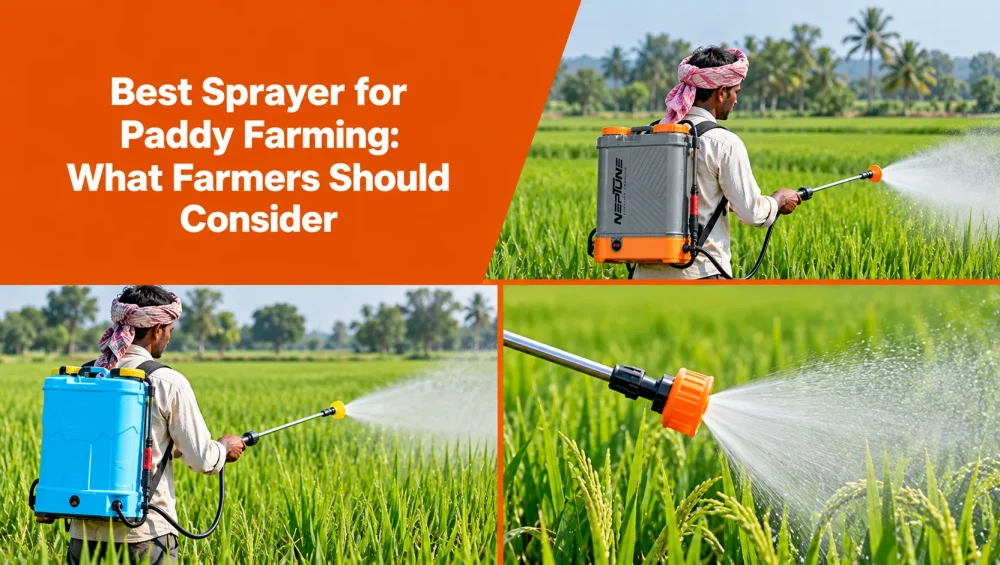
Paddy farming requires careful attention at every stage, especially when it comes to protecting crops from pests and diseases. Problems such as stem borers, leaf folders, planthoppers, and blast disease can spread quickly if they are not managed on time.
One of the easiest ways to improve crop protection is to use the right sprayer. But with so many options available, choosing the best sprayer for paddy farming can be confusing. The ideal machine depends on factors such as the size of your field, soil conditions, available labour, and the type of chemicals being used.
Types of Sprayers Suitable for Paddy Farming
Different sprayers work better for different farming conditions. Here are some commonly used options:
| Sprayer Type | Best For | Main Advantage | Limitation |
| Battery-Operated Knapsack Sprayer | Small to medium farms | Easy to operate and maintain | Limited battery backup |
| 2-Stroke / 4-Stroke Engine Sprayer | Medium-sized fields | Powerful spray and longer reach | Heavier and higher running cost |
| HTP Pump | Large fields with accessible field borders | Covers large areas with long hoses | Pump needs to remain stationary |
| Agricultural Drone Sprayer | Large or difficult-to-access fields | Fast application without entering the field | High initial investment |
What Should Farmers Consider Before Buying a Sprayer?
There is no single sprayer that works perfectly for every paddy farm. Before making a purchase, consider the following factors.
1. Field Conditions and Accessibility
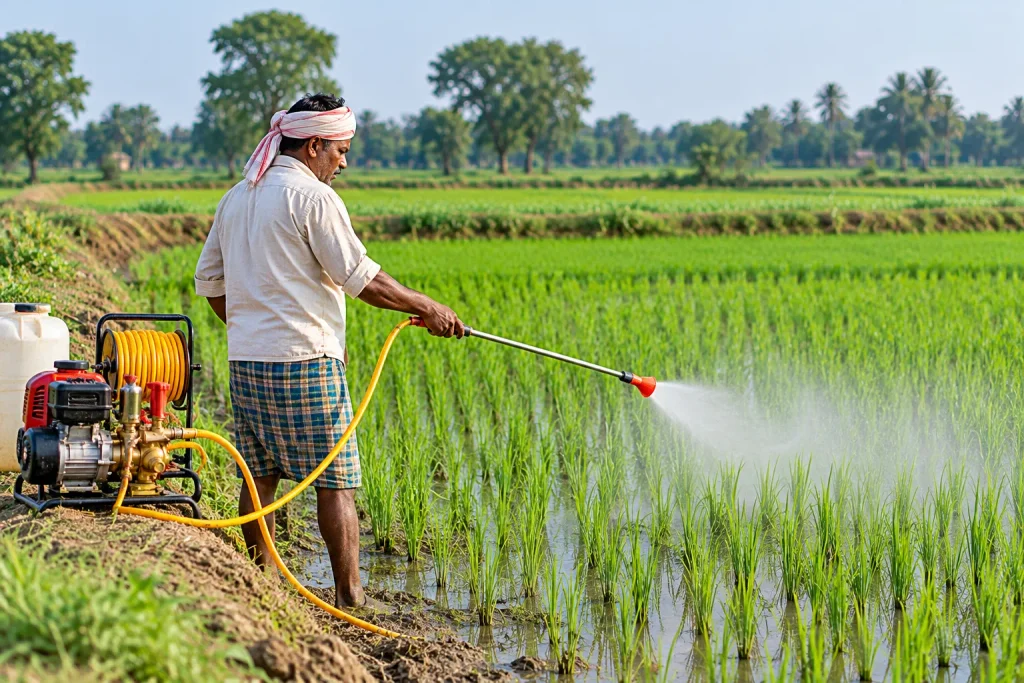
Paddy fields can be challenging to move through because of standing water and soft, muddy soil. Carrying a heavy sprayer for several hours can quickly become tiring and may even damage young plants.
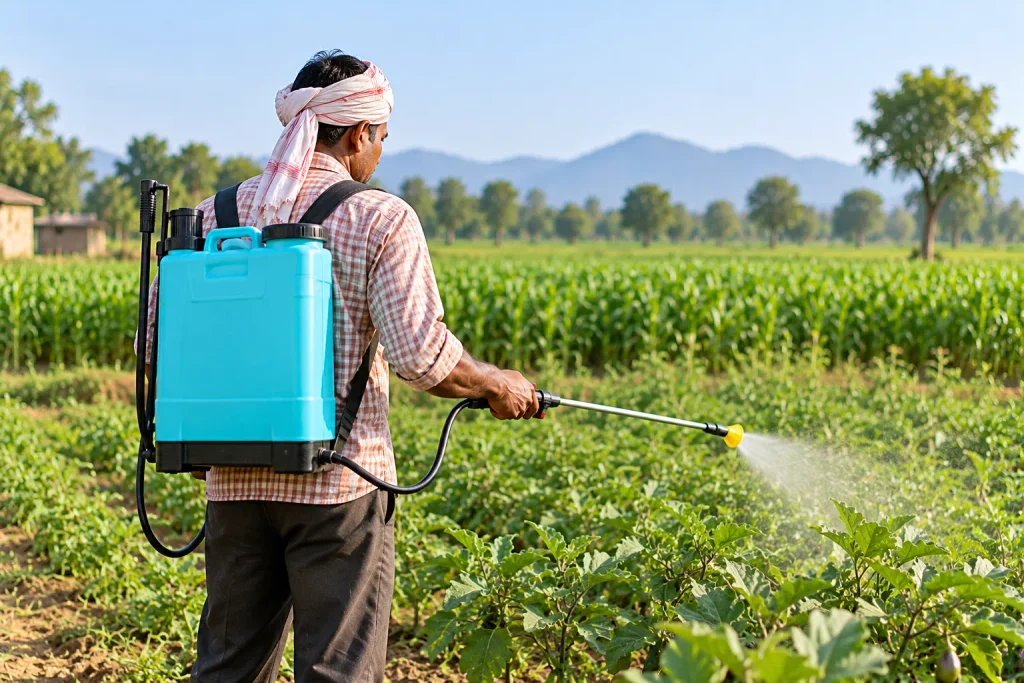
For small and medium-sized farms, a lightweight 16- to 20-litre battery sprayer for agriculture can be a practical option. It allows farmers to move around the field without carrying the extra weight of a fuel-powered machine.
If the field is particularly muddy or waterlogged, an HTP sprayer positioned safely on the field bund can be useful. Long hoses allow the operator to spray without walking through every part of the field. For larger farms, drone spraying can also reduce the need for workers to enter difficult areas.
2. Pressure and Spray Coverage
Good spray coverage is important in paddy farming. Rice plants can form a dense canopy, and pests may hide between leaves, making it difficult for the spray to reach them properly.
When choosing a sprayer, look for a model with adjustable pressure. The right pressure depends on the crop stage, nozzle, chemical being applied, and the required spray pattern.
Different nozzles can also produce different droplet sizes and spray patterns. Hollow-cone or twin-fan nozzles may be useful where better coverage of dense foliage is required. Always follow the pesticide manufacturer’s instructions for the correct nozzle and application method.
3. Tank Capacity and Comfort
Tank size directly affects how often you need to stop and refill the sprayer.
For many small and medium-sized farms, a 16- to 20-litre tank offers a reasonable balance between capacity and portability. However, remember that a full tank becomes significantly heavier, so comfort is just as important as capacity.
If you’re choosing an agriculture sprayer, check for:
- Padded shoulder straps
- Good back support
- A balanced tank design
- Comfortable handles
- Easy-to-operate trigger and controls
A comfortable sprayer can make long hours of spraying much easier.
4. Battery or Engine: Which One Should You Choose?
Your choice of power source largely depends on the size of your farm and how frequently you spray.
Battery-operated sprayers are popular for smaller farms because they are relatively quiet, easy to operate, and require less maintenance than petrol-powered machines. Many models use 12V batteries and can provide several hours of operation, depending on the battery capacity, pump, pressure, and usage.
Engine-powered models, or a power sprayer, are better suited to situations where higher pressure, greater spray distance, or faster coverage is required. They can be useful for larger fields, but they are generally heavier and require fuel and regular engine maintenance.
5. Build Quality and Chemical Resistance
A sprayer used regularly on a farm needs to withstand exposure to pesticides, fertilizers, and other agricultural chemicals.
Look for strong, chemical-resistant tanks, hoses, seals, and fittings. Stainless-steel or brass components can offer good durability, while chemical-resistant seals help reduce the chances of leakage and premature wear.
It’s also worth checking whether replacement parts such as nozzles, filters, hoses, and seals are easily available. A machine is much easier to maintain when spare parts can be found locally.
How to Maintain Your Paddy Sprayer
Regular maintenance can help keep your sprayer agriculture machine working properly and extend its service life.
1. Clean the sprayer after every use:
Run clean water through the tank, hose, pump, and nozzle to remove chemical residue. Follow the chemical label and equipment manufacturer’s cleaning instructions.
2. Clean the filters and nozzles:
Blocked filters or nozzles can reduce pressure and result in uneven spraying. Remove and clean them regularly.
3. Look after the battery:
If you’re using a battery-operated sprayer, follow the manufacturer’s charging and storage instructions. Avoid leaving the battery completely discharged for long periods.
4. Check the hoses and connections:
Inspect hoses, valves, and fittings for cracks, leaks, or loose connections before starting work.
5. Store the machine properly:
After cleaning and drying the sprayer, keep it in a dry and protected area away from direct sunlight and extreme temperatures.
Final Thoughts
Choosing the right sprayer can make crop protection easier, faster, and more efficient. For small and medium-sized paddy farms, a 12V dual-motor battery-operated knapsack sprayer can be a convenient option because it is easy to carry and operate.
For larger farms, HTP pumps can provide greater reach and coverage, while an agriculture drone sprayer can be useful where fields are particularly large, muddy, or difficult to access.
Instead of choosing a sprayer based only on price or power, consider your field size, terrain, spraying requirements, available labour, and maintenance needs. The right combination of equipment and proper spraying practices can help farmers apply crop-protection products more effectively throughout the season.