 Phone: 0731-3121900, Mob: 9229297668, 9826655552
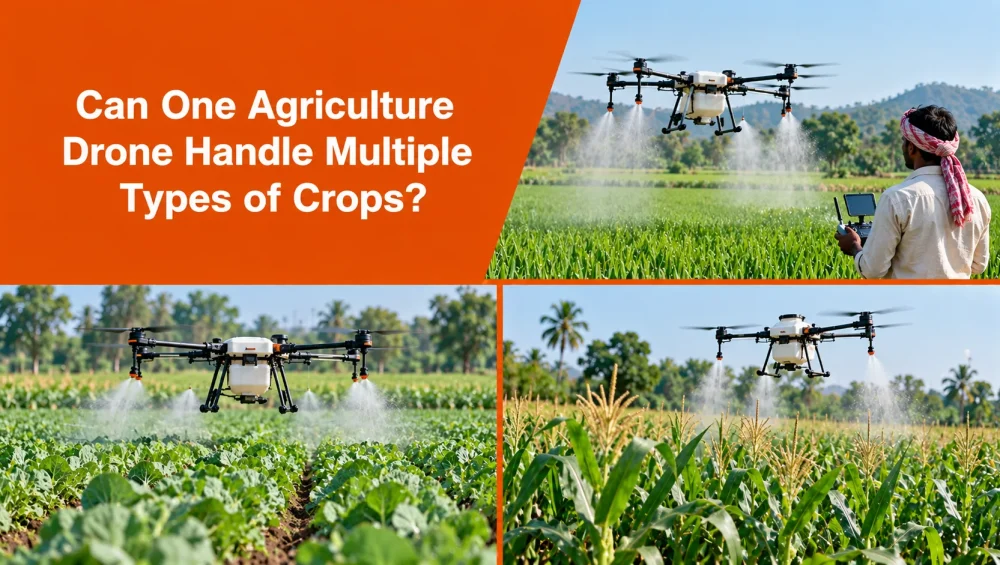
Agriculture is becoming more technology-driven, and drones are quickly becoming valuable tools for modern farmers. They can help with spraying, crop monitoring, fertilization, and field mapping, making farm operations faster and more precise.
But for farmers who grow different crops or manage multiple types of fields, one important question often comes up: Can a single agriculture drone be used for different crops?
The answer is yes. A modern agriculture drone can handle multiple crop types, but its performance depends on the drone’s capabilities, the crop structure, and the settings used for each application.
How Can One Drone Work With Different Crops?
Agricultural drones are designed to be flexible. Many modern models allow farmers to adjust their operations according to the crop and the type of work being performed.
Two important features make this possible:
1. Modular Payloads
Many advanced agricultural drones come with interchangeable payload systems. Depending on the farming requirement, operators can switch between different attachments.
For example, a drone spray machine can be configured with a liquid spraying system for pesticides, herbicides, or fertilizers. The same platform may also support a spreading system for seeds or granular fertilizers.
Some drones can also be equipped with cameras for crop monitoring and field mapping. This allows one drone to perform several agricultural tasks instead of requiring separate machines for every application.
2. Adjustable Flight Settings
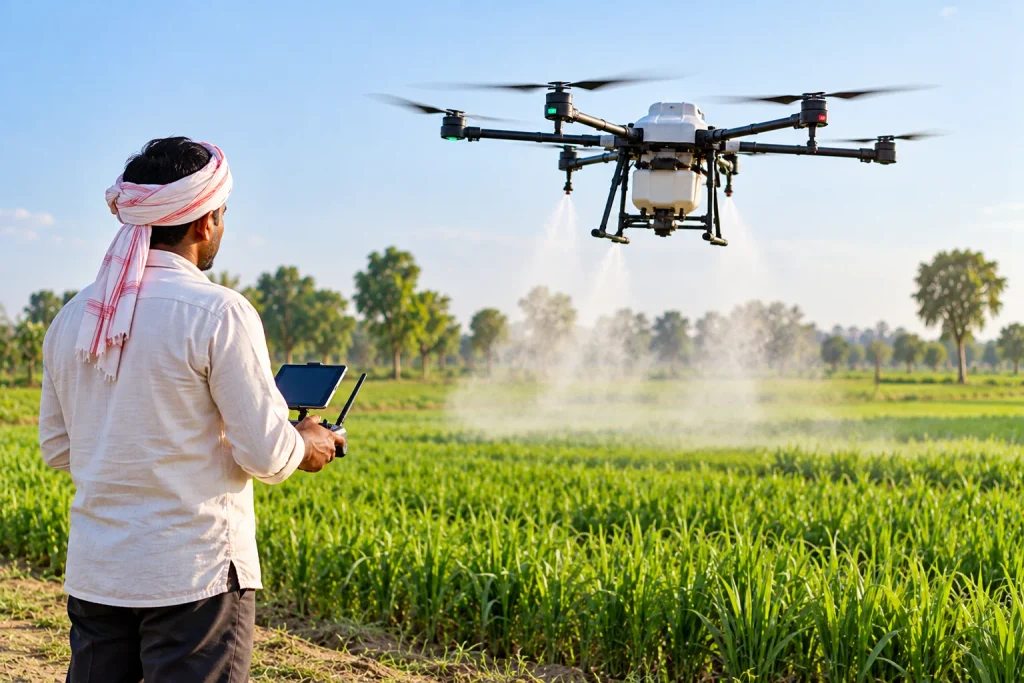
Different crops require different application methods. Drone software allows operators to adjust important settings such as flight height, speed, spray rate, and coverage area.
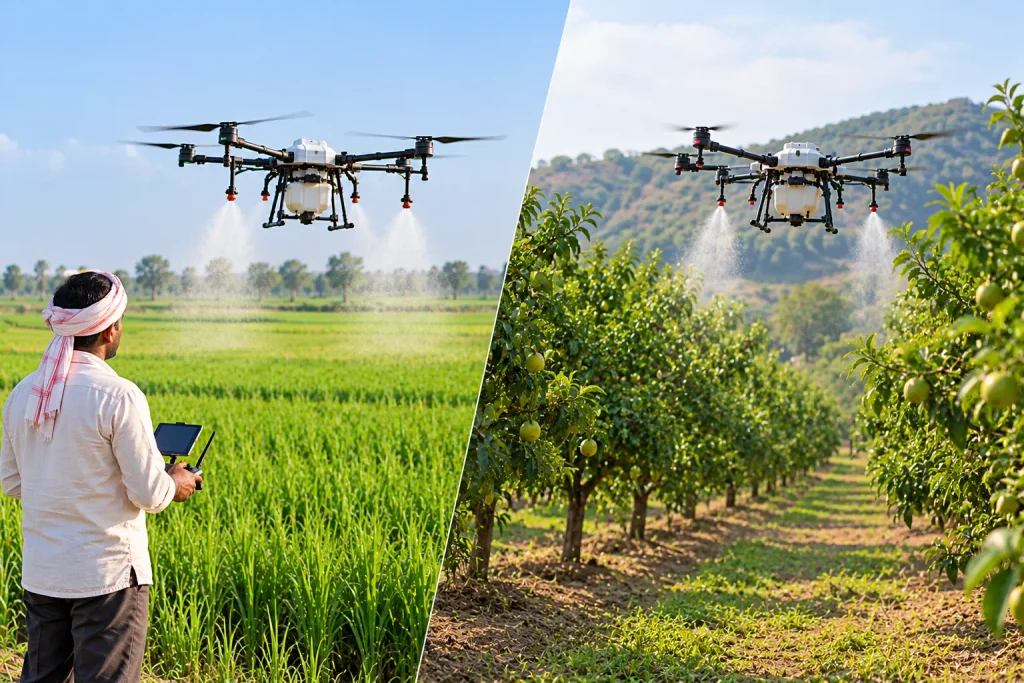
For example, a drone operating over a large wheat field may use a different flight pattern and application rate than one being used in a fruit orchard.
These customizable settings make it easier to use the same drone across different crops and field conditions.
Field Crops vs. Specialty Crops
Although one drone can be used across different crops, not every crop presents the same challenges. The height, density, and structure of the plants can significantly affect drone performance.
1. Wheat, Rice, Corn, and Soybeans
Broad-acre crops such as wheat, rice, corn, and soybeans are generally easier to manage with agricultural drones.
These crops usually have relatively consistent canopy heights and large, open growing areas. An agriculture spraying drone can move efficiently across these fields while operators adjust the application rate and flight path according to the crop.
For example, the same drone could be used in a rice field and then configured for a soybean field by changing the relevant spraying parameters.
2. Orchards and Vineyards
Fruit orchards and vineyards can be more challenging.
Crops such as apples, citrus fruits, and grapes often have dense and uneven canopies. Simply flying over the top of the plants may not provide sufficient coverage because the leaves and branches can prevent the spray from reaching inner or lower areas.
For these applications, a drone with advanced features can make a significant difference.
Important features may include:
* Terrain-following technology: Helps the drone maintain a suitable height when operating over uneven or sloping land.
* Obstacle avoidance: Helps detect trees, poles, and other obstacles during flight.
* Adjustable spray systems: Allow operators to modify spray output according to crop requirements.
* Powerful rotor airflow: Can help improve spray penetration into denser plant canopies.
Therefore, while the same drone can be used for both field crops and orchards, the required settings and equipment may be different.
Benefits of Using One Drone for Multiple Crops
Using a versatile agricultural drone can provide several advantages for farmers managing different crops.
Lower Equipment Costs
Instead of purchasing separate drones for every crop or farming operation, a multi-purpose drone can potentially perform several tasks. This can reduce the need for multiple pieces of specialized equipment.
Better Resource Management
Drones can help farmers apply agricultural inputs more precisely. When combined with crop-monitoring technology, they can also help identify areas that may require additional attention.
This can support more efficient use of pesticides, fertilizers, water, and other agricultural resources.
Easier Operations
Using one drone platform across multiple crops can simplify training and daily operations. Once operators become familiar with the drone’s controls, software, maintenance, and safety procedures, they can apply that knowledge across different fields.
What Should Farmers Consider Before Choosing a Multi-Crop Drone?
Before investing in an agriculture drone sprayer, farmers should consider the types of crops they grow and the applications they need.
Important factors include:
* Payload capacity
* Battery life and flight time
* Spraying and spreading capabilities
* Adjustable application rates
* Terrain-following and obstacle-avoidance features
* Software and GPS accuracy
* Availability of spare parts and technical support
* Local regulations and operator requirements
A drone that works well for a large rice or wheat field may not necessarily provide the same performance in a dense orchard. Choosing a platform based on the farm’s actual requirements is therefore essential.
Conclusion
A single agriculture drone can be used to manage multiple types of crops, especially when it offers flexible payload options and customizable flight and application settings.
From wheat, rice, corn, and soybeans to orchards and vineyards, the same drone platform can support different farming operations when it is configured correctly. However, crop structure, field conditions, application requirements, and the drone’s technical capabilities should always be considered.
For farmers managing diverse crops, choosing a versatile drone can provide greater flexibility while helping simplify equipment management and improve the efficiency of agricultural operations.
Frequently Asked Questions
1. Can an agriculture drone be used for different crops?
Yes, an agriculture drone can be used for multiple crops such as rice, wheat, corn, soybeans, fruits, and vegetables. However, flight height, speed, spray rate, and other settings should be adjusted according to the crop and field conditions.
2. What crops can be sprayed using an agricultural drone?
Agricultural drones can be used for spraying a wide range of crops, including rice, wheat, cotton, corn, sugarcane, vegetables, and several fruit crops. The suitability depends on the drone’s payload capacity, spraying system, and the crop’s structure.
3. Is an agriculture spraying drone suitable for large farms?
Yes, an agriculture spraying drone can be useful for large farms because it can cover fields efficiently and apply agricultural inputs with controlled application rates. Farmers should select a drone based on factors such as battery capacity, tank size, coverage rate, terrain, and the specific crops being cultivated.