 Phone: 0731-3121900, Mob: 9229297668, 9826655552
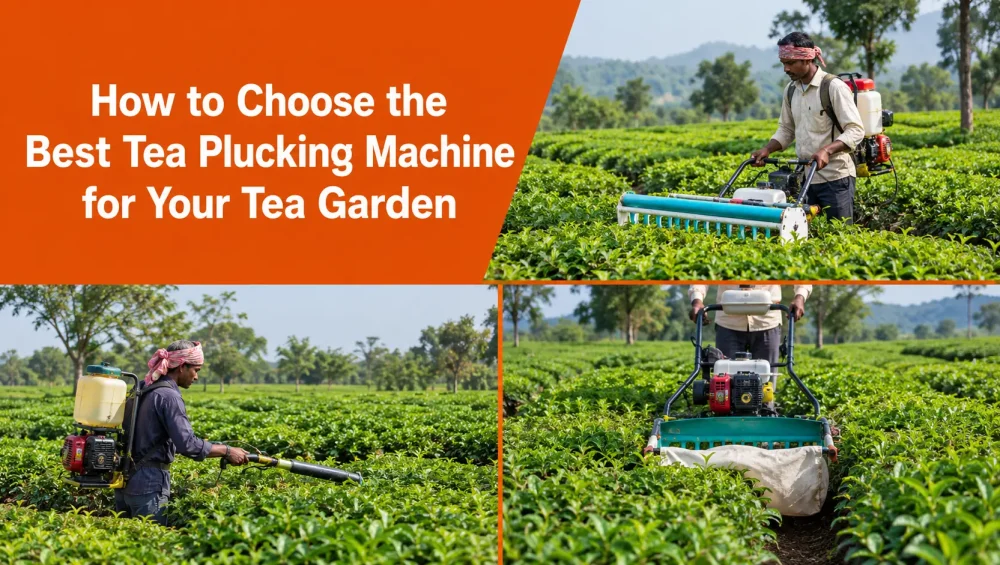
Tea harvesting has evolved significantly from labor-intensive manual picking to modern mechanized plucking. Choosing the right tea plucking machine can help improve productivity, maintain leaf quality, reduce labor dependency, and control operating costs.
Before investing in a machine, it is important to consider your tea garden’s terrain, bush design, harvesting requirements, power source, operator comfort, and maintenance support.
Assess Your Tea Garden Terrain and Canopy Design
The physical layout of your tea plantation plays a major role in selecting the right machine.
- Topography: Steep slopes and terraced gardens are better suited to lightweight, single-operator or backpack-mounted machines. Flat and continuous plantations can accommodate two-man or larger harvesting machines.
- Row Spacing: Choose a machine whose cutting width matches the spacing between tea bushes. Wider blades can cover more area but may be difficult to operate in narrow or irregular rows.
- Canopy Shape: Curved blades are particularly useful for following the natural contour of tea bushes and achieving a more uniform harvest.
Understanding your garden layout before purchasing a machine can prevent operational difficulties and improve harvesting efficiency.
Single-Man vs. Two-Man Tea Harvesters
The choice between single-man and two-man harvesters largely depends on plantation size, terrain, and available labor.
Single-Man Tea Harvesters
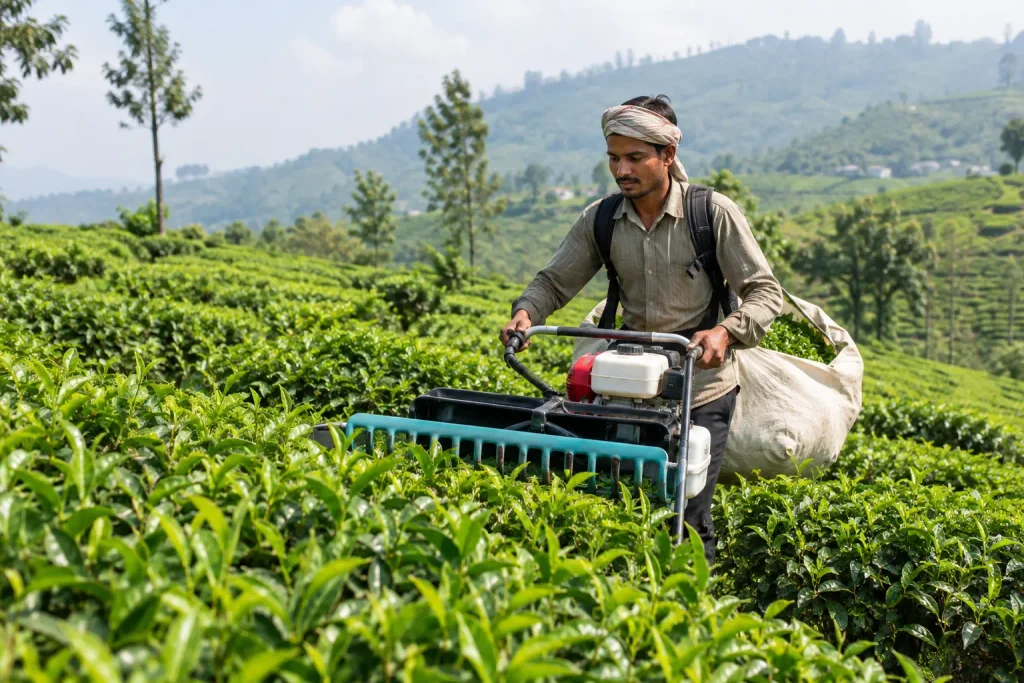
Single-man machines are suitable for small and medium-sized tea gardens, uneven terrain, and areas where greater maneuverability is required. Their compact design makes them easier to handle around irregularly shaped bushes and narrow rows.
A lightweight tea plucker machine can also be useful for farmers who want to reduce manual plucking time without investing in large harvesting equipment.
Two-Man Tea Harvesters
Two-man machines are designed for larger plantations with relatively uniform rows and accessible terrain. They generally offer a wider cutting area and can cover more bushes in less time.
However, they require coordination between two operators and sufficient space between rows for comfortable operation.
Select the Right Engine and Power Source
The power source affects machine performance, maintenance requirements, operating costs, and operator comfort.
2-Stroke Petrol Engines
Two-stroke engines are known for their high power-to-weight ratio and are commonly used in portable agricultural equipment. They can be practical in remote tea gardens where access to electricity or charging facilities is limited.
However, they require proper fuel-oil mixing and regular maintenance.
4-Stroke Petrol Engines
Four-stroke engines generally provide smoother operation and better fuel efficiency than comparable two-stroke engines. They can be a suitable option for operators who prioritize longer operating periods and reduced fuel consumption.
The main consideration is their additional weight compared with compact two-stroke models.
Battery-Powered Machines
Lithium-ion tea harvesters are increasingly attractive because they produce no direct field emissions and typically operate with lower noise and vibration. They also eliminate many routine engine-related maintenance tasks.
For plantations with convenient access to charging facilities, battery-powered equipment can be an efficient and user-friendly option. Farmers comparing models can also explore a tea plucker machine online to compare specifications, features, and prices before making a purchase.
Consider Blade Design and Plucking Quality
Tea leaf quality is closely connected to the precision of the cutting system. A good machine should provide consistent cutting without unnecessarily damaging the tea bush or harvested shoots.
Reciprocating Curved Blades
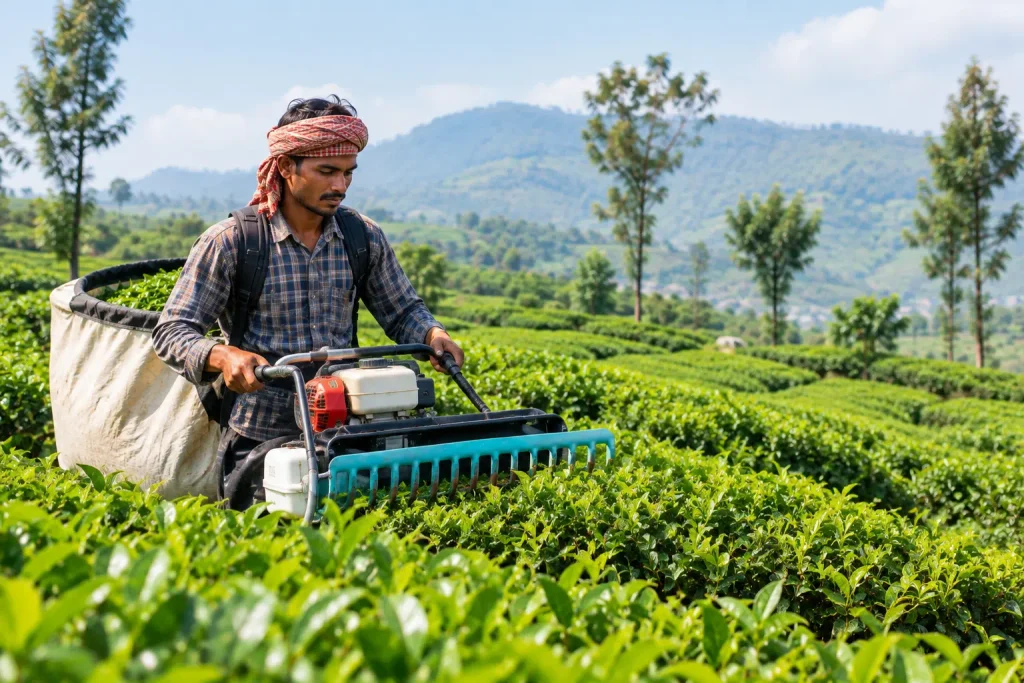
Curved reciprocating blades can follow the natural shape of tea bushes, helping maintain a more even plucking surface. Uniform cutting also supports consistent regrowth during subsequent harvesting cycles.
Blade Material and Sharpness
Choose machines with durable, high-quality blades that can maintain their sharpness during repeated use. Dull or damaged blades can produce uneven cuts and reduce harvesting efficiency.
Regular blade inspection, sharpening, cleaning, or replacement is essential for maintaining consistent performance.
Blower and Collection System
A built-in blower and collection bag can help move freshly harvested leaves away from the cutting area and into the collection bag. This reduces leaf accumulation on the bush canopy and makes collection more convenient for operators.
Prioritize Ergonomics, Weight, and Operator Safety
Tea harvesting can involve several hours of repetitive operation, making operator comfort an important consideration.
Look for features such as:
- Anti-vibration mounts and cushioned grips
- Balanced weight distribution
- Comfortable shoulder straps for backpack-mounted models
- Protective guards around the cutter bar
- Easy-to-access controls
- Quick-stop or emergency shut-off mechanisms
A well-balanced machine can reduce operator fatigue and help maintain consistent productivity throughout the working day.
Evaluate Spare Parts and Maintenance Support
Even a high-quality harvesting machine requires routine maintenance. Before purchasing, check whether essential replacement parts are readily available in your area.
Important components include:
- Cutting blades
- Spark plugs for petrol models
- Air filters
- Drive belts
- Batteries and chargers for electric models
- Lubrication components
It is also worth choosing a manufacturer or dealer that provides clear warranty coverage, technical assistance, and dependable after-sales service.
Making the Right Choice for Your Tea Estate
Selecting the right harvesting equipment requires balancing garden size, terrain, labor availability, budget, and desired harvesting capacity. A reliable tea plucker should match the plantation’s working conditions while providing consistent performance and convenient handling.
For smaller or steep tea gardens, lightweight single-operator machines can provide excellent maneuverability. Larger, flat plantations may benefit from wider two-man harvesting systems that can cover more area per working hour.
Battery-powered models are worth considering when low noise, reduced maintenance, and convenient charging are priorities, while petrol-powered machines can be more practical in remote locations.
Ultimately, the best machine is not necessarily the largest or most powerful model. It is the one that matches your plantation’s conditions while delivering consistent harvesting performance, operator comfort, and manageable long-term costs.
Frequently Asked Questions
1. What is a tea plucking machine used for?
A tea plucking machine is used to mechanically harvest fresh tea leaves from tea bushes. It helps reduce manual labor, improve harvesting speed, and maintain consistent plucking across the plantation.
2. How do I choose the best tea plucking machine?
Consider your tea garden’s size, terrain, bush spacing, required harvesting capacity, power source, machine weight, blade design, and availability of spare parts and after-sales service.
3. Is a battery-powered tea plucking machine better than a petrol model?
Battery-powered models are quieter, produce no direct field emissions, and generally require less routine maintenance. Petrol models can be more suitable for remote tea gardens where charging facilities are limited.