 Phone: 0731-3121900, Mob: 9229297668, 9826655552
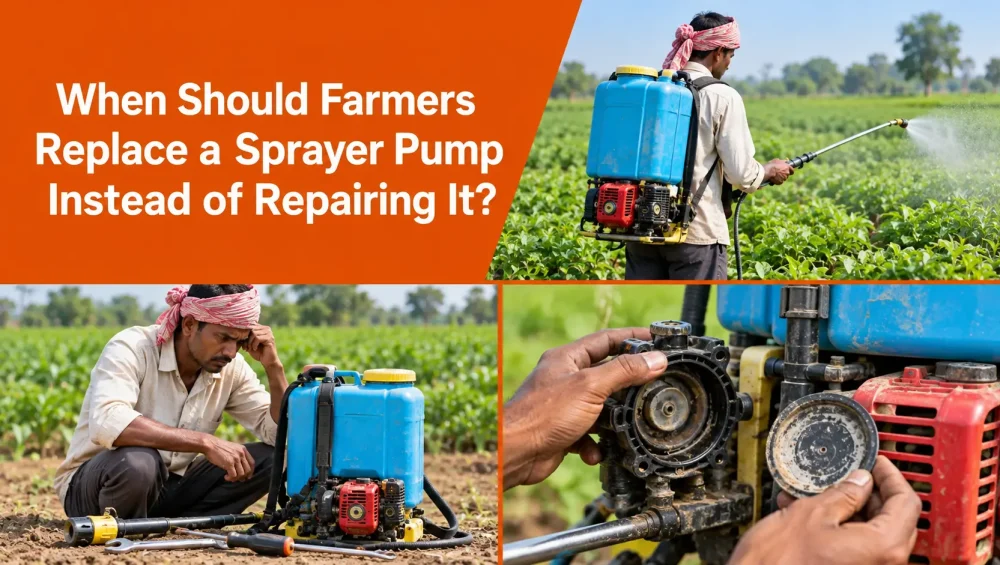
For farmers, a sprayer is not just another piece of equipment. It plays an important role in protecting crops and making sure pesticides, fertilizers, and other solutions are applied evenly across the field. At the heart of many spraying systems is an agriculture sprayer pump, which keeps the liquid moving at the required pressure.
But what happens when the pump starts giving trouble?
The first thought is usually, “Let’s get it repaired.” And in many cases, that is the right choice. A worn seal, damaged valve, or blocked component can often be fixed without spending much money.
However, there comes a point when repairing the same pump again and again may cost more time and money than replacing it. So, how do you know when it is time to make the switch?
When Small Repairs Turn Into Constant Repairs
An occasional repair is normal. Agricultural equipment works in demanding conditions, and some parts naturally wear out.
The problem starts when the pump keeps breaking down.
If you have already replaced seals, valves, diaphragms, or other parts several times and the same problems keep coming back, the pump may be showing signs of serious wear.
Frequent breakdowns can also be frustrating during the spraying season. A few hours of downtime at the wrong time can affect your entire spraying schedule.
If your pump is spending more time in the workshop than in the field, it may be worth considering a replacement. Farmers looking for reliable spray pumps for agriculture should also consider durability, maintenance requirements, and the availability of spare parts before making a purchase.
When Spray Pressure Is No Longer Consistent
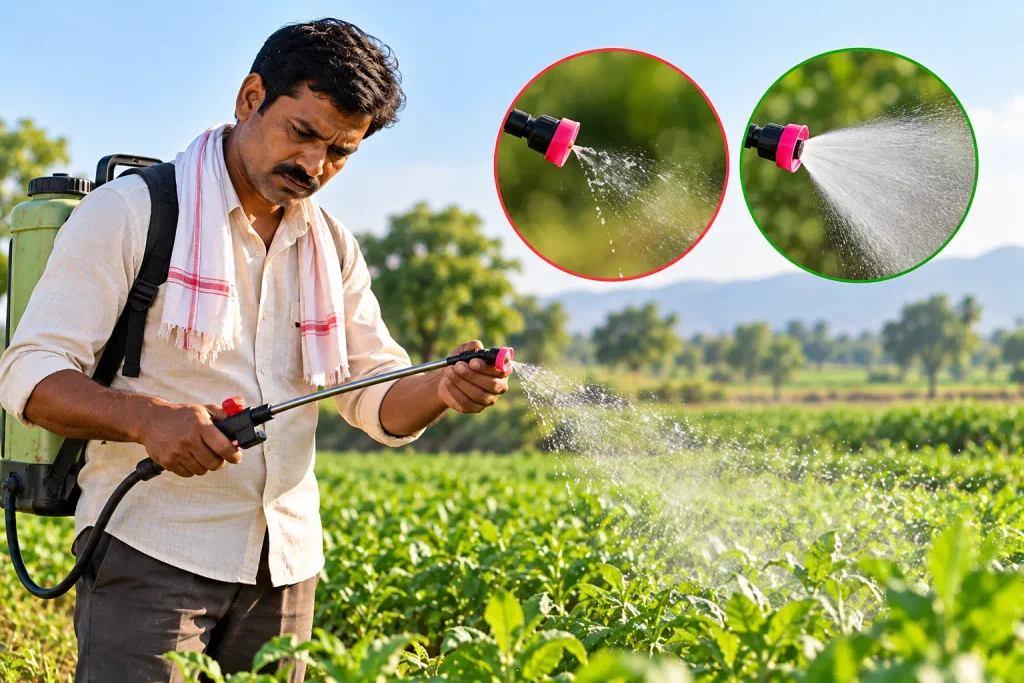
A good sprayer pump should provide steady pressure throughout the spraying process. When the pump starts wearing out, maintaining that pressure can become difficult.
You may notice that:
- The spray becomes weaker than usual
- Pressure keeps going up and down
- Some nozzles spray more than others
- Spray coverage across the field becomes uneven
- It takes longer to complete the same job
Uneven spraying isn’t something farmers can afford to ignore. Too little application may leave crops unprotected, while excessive application can lead to unnecessary chemical use.
If basic repairs don’t solve the pressure problem, replacing the pump could be a better option.
When the Main Pump Is Damaged
Sometimes the problem is more than a worn-out part.
Cracks in the pump body, serious corrosion, a damaged shaft, or excessive wear inside the pump can indicate that the entire unit has reached the end of its useful life.
Replacing one small component might temporarily fix the issue, but if the main pump assembly is damaged, another failure may be just around the corner.
In such situations, it makes sense to compare the cost of repairing the pump with the cost of installing a new one.
When Repairing It Is Costing Too Much
Farmers already have plenty of expenses to manage, so every maintenance decision matters.
Before spending money on another repair, take a moment to look at the bigger picture.
How much have you spent on repairs over the last season? How often has the pump stopped working? How much time have you lost because of those breakdowns?
A repair that looks inexpensive on its own may become costly when it happens several times a year.
If the total repair and maintenance cost is getting close to the price of a new pump, replacement may make more financial sense.
When Spare Parts Are Hard to Find
Older pumps can sometimes become difficult to maintain simply because their spare parts are no longer easily available.
If you are constantly searching for the right seal, valve, diaphragm, or other component, maintaining the pump can become a challenge. There is also the risk of using unsuitable replacement parts, which may affect performance.
A newer pump with readily available spare parts and proper service support can make maintenance much easier in the long run.
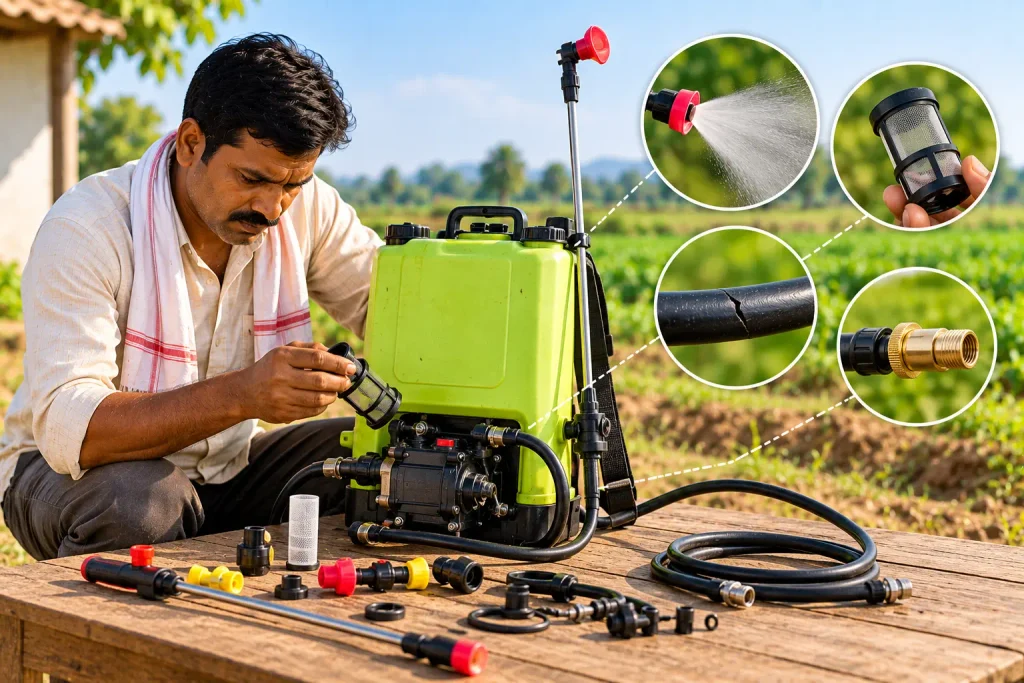
Consider the Sprayer as a Whole
Before replacing a pump, it is also worth checking the condition of the complete spraying machine for agriculture. Sometimes low pressure or poor spraying isn’t caused by the pump alone. Blocked nozzles, damaged hoses, clogged filters, or incorrect connections can create similar symptoms.
A proper inspection can help identify the actual problem and prevent you from replacing a perfectly usable pump.
Similarly, when purchasing a replacement, make sure the pump is compatible with your agriculture sprayer machine, including its pressure and flow requirements.
Repair or Replace? Look at the Bigger Picture
Not every pump problem means you need a new pump.
If the issue is minor and the pump is otherwise working well, a simple repair is often the most sensible solution. Regular cleaning, proper maintenance, and timely replacement of worn parts can also significantly extend its life.
But if the pump is breaking down frequently, struggling to maintain pressure, showing major physical damage, or becoming expensive to maintain, replacement deserves serious consideration.
The Bottom Line
There is no fixed age at which every sprayer pump needs to be replaced. The right decision depends on its condition, performance, repair history, and the cost of keeping it running.
Think of it this way: repair when the problem is small; replace when the problems become a pattern.
A reliable pump means fewer interruptions, more consistent spraying, and better use of your time and resources. Before buying a replacement, make sure you choose a pump that matches your sprayer, required pressure, flow rate, and farming needs.
Sometimes, spending on a new pump today can save you from repeated repair bills and unnecessary headaches throughout the season.
Frequently Asked Questions
1. How do I know if my agriculture sprayer pump needs replacement?
If your pump frequently breaks down, cannot maintain consistent pressure, has major internal or external damage, or requires repeated costly repairs, it may be time to replace it rather than repair it again.
2. How often should a sprayer pump be replaced?
There is no fixed replacement period for every pump. Its lifespan depends on usage, maintenance, operating conditions, and pump quality. Regular inspection and timely servicing can help extend its working life.
3. Can a damaged sprayer pump affect crop spraying?
Yes. A worn or damaged pump can cause inconsistent pressure and uneven spray distribution. This may result in poor crop coverage and inefficient use of pesticides or fertilizers.