 Phone: 0731-3121900, Mob: 9229297668, 9826655552
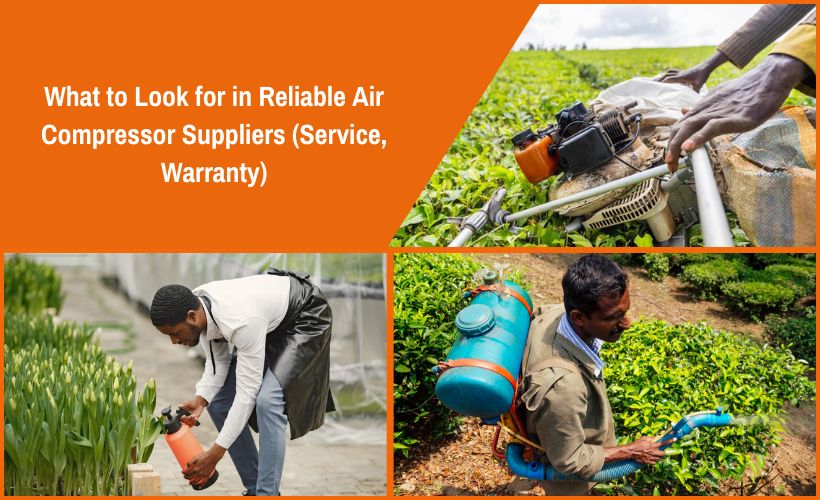
In the competitive landscape of industrial and agricultural equipment, selecting the right tools and the right partners can be the difference between operational excellence and costly downtime. Whether you are a municipality managing public health or a farm owner protecting livestock, understanding the nuances of modern machinery is essential. This guide breaks down critical insights on air compressor procurement, the financial logic behind fogging equipment, and why specific technologies are transforming pest control and climate management in India, helping buyers connect with reliable air compressor suppliers and advanced fogging solutions.
An air compressor is the backbone of many industrial operations. However, even the most advanced machine is only as reliable as the support system behind it. When evaluating suppliers, focus on two critical pillars: service capability and warranty strength.
1. Comprehensive Service & Support
A dependable supplier offers more than just equipment they offer a long-term partnership. Key service elements to evaluate include:
- System Audits: A good supplier assesses your actual air demand and usage patterns to prevent energy wastage and oversizing.
- Fast Response Time: In industrial environments, even a few hours of downtime can result in significant financial losses. Ensure the supplier has a strong local service network with certified technicians available around the clock.
- Availability of Genuine Spare Parts: Using non-original components can reduce efficiency, void warranties, and cause premature wear. Reliable suppliers maintain a ready inventory of OEM filters, oils, belts, and valves.
2. The Strength of the Warranty
Warranty terms reveal a supplier’s confidence in their engineering. Look beyond the headline number of years and examine the details:
- Does the warranty cover the airend, the most expensive and critical component of a screw compressor?
- Are there hidden conditions, such as mandatory service contracts, to keep the warranty valid?
A transparent and comprehensive warranty is a strong indicator of product quality and supplier credibility.
Vehicle Mounted Fogging Machine Cost vs Handheld: ROI for Municipalities
Municipal authorities are responsible for large-scale vector control across urban and semi-urban areas, where investing in a vehicle mounted fogging machine can significantly improve efficiency and coverage. Choosing between handheld and vehicle-mounted fogging machines depends largely on coverage area, manpower, and speed of execution.
| Feature | Handheld Foggers | Vehicle-Mounted Foggers |
| Initial Cost | ₹7,000 – ₹40,000 | ₹1,50,000 – ₹7,00,000 |
| Coverage Area | Narrow lanes, slums, indoor spaces | Main roads, large parks, open areas |
| Labor Requirement | High (one operator per unit) | Low (single driver/operator) |
| Chemical Tank Capacity | 2–10 liters | 50–150 liters |
ROI Verdict
Although vehicle-mounted foggers involve a higher upfront investment, they deliver faster and more scalable returns for municipalities. These machines can cover up to ten times more area in a single shift while significantly reducing labor costs, making them the preferred choice for large public health campaigns.
Why Cold Fogging Machines Beat Smoke Fogging for Pest Control
Traditional thermal or smoke fogging has long been used for pest control, but the modern cold fogging machine is rapidly becoming the preferred choice for both public health and agricultural applications. However, cold fogging—also known as ULV (Ultra Low Volume) technology—is rapidly becoming the industry standard.

Key advantages include:
- Precision Droplet Control: Cold foggers generate droplets in the 5–50 micron range, allowing them to remain airborne longer and achieve better contact with insects and pathogens.
- Enhanced Safety: Since cold fogging does not rely on heat or combustion, it eliminates fire hazards and is safer for indoor environments and sensitive locations.
- Water-Based Formulations: Unlike thermal fogging, which often uses diesel as a carrier, cold fogging relies on water-based solutions. This reduces operational costs and minimizes environmental and health risks.
- Non-Wetting Mist: The ultra-fine mist does not leave residues, making it suitable for hospitals, offices, electronic equipment, and food-processing areas.
Fogging Machine India for Dairy Farms, Poultry, and Greenhouses
India’s hot and humid climate poses serious challenges to agricultural productivity, making the adoption of a high-quality fogging machine india market solutions essential for farms, dairies, and protected cultivation. Today, fogging machines serve not only as pest-control tools but also as essential climate-management systems.
Dairy and Poultry Farms
Heat stress significantly impacts livestock health and output. When temperatures exceed 35°C:
- Milk yield in dairy cattle can drop by up to 30%.
- Poultry mortality rates increase sharply.
High-pressure fogging systems help by:
- Lowering ambient temperatures by 5–10°C through evaporative cooling.
- Dispersing disinfectants to control diseases such as Foot and Mouth Disease (FMD) and avian influenza.
Greenhouses
For high-value crops like roses, cucumbers, and bell peppers, precise humidity control is critical. Cold fogging systems provide uniform moisture without wetting plant surfaces, reducing the risk of fungal infections while maintaining optimal growing conditions during peak summer months.
Conclusion
Whether you are selecting an industrial air compressor supplier or investing in advanced ULV fogging technology, the emphasis should always be on long-term reliability, safety, and operational efficiency. Smart equipment choices today lead to higher productivity, lower operating costs, and healthier working and living environments tomorrow.
FAQ
Q1. Is a vehicle-mounted fogging machine better than a handheld fogger for municipalities?
For large-scale mosquito and vector control, vehicle-mounted fogging machines are generally more effective. They cover wider areas in less time, require fewer operators, and deliver better consistency during large public health drives. Handheld foggers are more suitable for narrow lanes, indoor spaces, and spot treatments.
Q2. Why is cold fogging preferred for farms, hospitals, and greenhouses?
Cold fogging is preferred because it produces ultra-fine droplets that stay suspended in the air longer, ensuring better pest control and disinfection. It is safer than thermal fogging, uses water-based chemicals, does not leave residues, and is ideal for sensitive environments such as dairy farms, poultry sheds, hospitals, and greenhouses.