 Phone: 0731-3121900, Mob: 9229297668, 9826655552

Weeds are among the biggest challenges farmers face because they compete with crops for sunlight, water, nutrients, and growing space. Traditionally, farmers have relied on manual labor or chemical herbicides for weed control, but both methods can be time-consuming and expensive.
A power weeder offers a faster and more efficient solution. Designed to remove weeds while loosening and aerating the soil, this compact agricultural machine can help farmers save labor, improve field conditions, and complete routine farm operations more efficiently.
In this guide, we explain how a power weeder works, its major components, benefits, and essential maintenance practices.
What Is a Power Weeder?
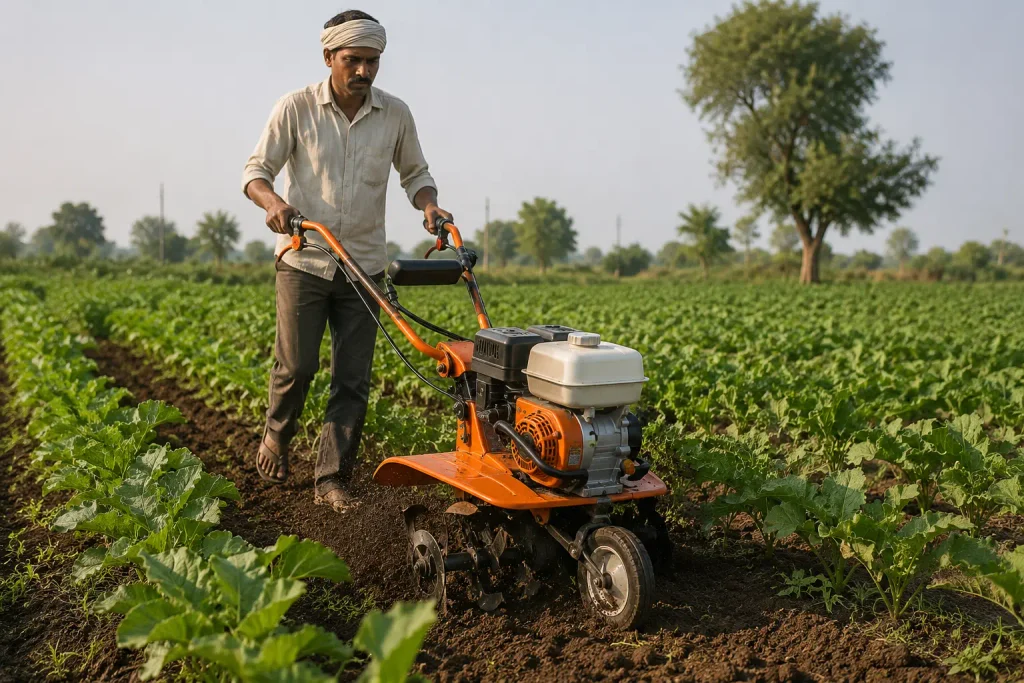
A power weeder machine is a compact, walk-behind agricultural machine used for weed removal, soil cultivation, and light tillage. Depending on the model, it may be powered by a petrol, diesel, or electric engine.
Unlike large tractor-operated equipment, a power weeder is designed to work effectively in narrow spaces and between crop rows. Its rotating blades break up the soil and cut or uproot weeds while the operator guides the machine across the field.
Besides weed control, many models can also help loosen compacted soil, improve aeration, and mix organic matter into the upper layer of the soil.
How Does a Power Weeder Work?
The working mechanism of an agriculture power weeder involves several coordinated components. Here’s a simple step-by-step explanation:
1. Engine Generates Power
The process begins when the operator starts the machine’s engine. The engine produces mechanical power, which is transferred through the clutch, transmission, and gearbox to the rotating shaft.
Depending on the machine, the power source and transmission system may vary, so farmers should always follow the manufacturer’s operating instructions.
2. Rotary Blades Start Rotating
Once the drive system is engaged, the rotary blades or tines begin spinning. These hardened steel blades are designed to penetrate the soil and cut through weeds.
The speed and rotation direction can vary between models. Some machines are designed primarily for shallow cultivation and inter-row weeding, while others can perform deeper tillage.
3. Weeds Are Cut and Uprooted
As the machine moves forward, the rotating tines enter the soil and disturb the area around the weeds. The blades cut weed stems and can loosen or uproot their roots, helping reduce unwanted plant growth.
For best results, the operator should maintain an appropriate working speed and avoid damaging the roots of the main crop.
4. Soil Is Loosened and Aerated
The rotating tines also break up compacted soil and create a loose soil structure. This can improve air movement and water infiltration around the crop’s root zone.
The depth of operation depends on the machine, soil condition, crop, and type of attachment being used.
5. Plant Residues Can Be Mixed Into the Soil
During cultivation, chopped weeds and plant residues may become incorporated into the upper soil layer. This can contribute organic matter to the soil as the residues decompose.
However, farmers should consider the crop, weed species, and field conditions before incorporating mature or seed-bearing weeds.
Key Components of a Power Weeder
Understanding the main components makes it easier to operate and maintain the machine properly.
| Component | Function |
| Engine | Provides the mechanical power required to operate the machine. |
| Rotary Blades/Tines | Cut weeds and loosen or cultivate the soil. |
| Gearbox & Transmission | Transfers engine power to the rotating components and controls operating speed. |
| Clutch | Engages or disengages power transmission to the working mechanism. |
| Handlebars & Controls | Allow the operator to steer and control throttle, clutch, and other functions. |
| Depth Control | Helps regulate the working depth of the blades. |
| Protective Guards | Help protect the operator from soil, stones, and other debris. |
Key Benefits of Using a Power Weeder
Saves Time and Labor
Manual weeding can require considerable time and physical effort, particularly on larger farms. A farm weeder allows one operator to cover more area in less time, depending on field conditions and machine capacity.
Improves Soil Preparation
The rotating blades loosen the upper soil layer and can help break surface crusts. Better soil structure can support improved water infiltration and root development.
Useful for Different Crops
Power weeders can be useful in vegetable fields, orchards, sugarcane, cotton, maize, and other crops where the machine can safely operate between rows.
Reduces Dependence on Manual Weeding
Mechanical weed control can reduce the amount of repetitive manual labor required for certain farm operations. It can be particularly useful when labor availability is limited.
Offers Multiple Applications
Depending on the attachments and model, a power weeder may be used for inter-row weeding, soil cultivation, seedbed preparation, and other light tillage tasks.
Tips for Using a Power Weeder Efficiently
Farmers can improve machine performance and reduce the risk of crop or equipment damage by following a few basic practices:
- Check the field first: Remove large stones, wire, and other obstacles before operation.
- Maintain the correct working depth: Avoid unnecessarily deep cultivation, especially near crop roots.
- Operate at an appropriate speed: Excessive speed can reduce weeding effectiveness and make the machine difficult to control.
- Keep the blades sharp: Worn or damaged tines can reduce cutting performance.
- Maintain sufficient space between rows: Make sure the machine can pass without damaging standing crops.
- Use proper safety equipment: Wear suitable footwear, eye protection, and other recommended protective equipment.
- Follow the manufacturer’s instructions: Operating procedures differ between models and engine types.
Power Weeder Maintenance Tips
Regular maintenance is essential for reliable performance and a longer machine life.
Inspect the Rotary Blades
Check the tines before and after use. Replace cracked, bent, or excessively worn blades instead of continuing to operate with damaged components.
Check Engine Oil and Filters
Monitor engine oil according to the manufacturer’s recommended schedule. Clean or replace air filters when required, especially when working in dusty farm conditions.
Clean the Machine After Every Use
Remove soil, weeds, and plant residues from the blades, shaft, guards, and other areas. Cleaning helps prevent buildup, corrosion, and unnecessary strain on moving parts.
Lubricate Moving Components
Inspect the gearbox, transmission, and other lubrication points regularly. Use the lubricant recommended by the manufacturer.
Inspect Fasteners and Controls
Check bolts, nuts, cables, handles, and safety controls periodically. Loose or damaged components should be repaired before the next operation.
Conclusion
A power weeder is a versatile agricultural machine that can make weed control and soil cultivation more efficient. By using rotating blades to disturb the soil and control unwanted vegetation, it can reduce manual effort while supporting better field preparation.
Choosing the right machine depends on factors such as crop type, row spacing, soil condition, required working depth, engine type, and farm size. With correct operation and regular maintenance, a power weeder can become a valuable part of modern farm equipment and help farmers manage routine field operations more efficiently.
Frequently Asked Questions
1. What is a power weeder used for?
A power weeder is mainly used for removing weeds, loosening soil, breaking soil crusts, and cultivating between crop rows. It can reduce manual labor and make routine field operations faster.
2. Which crops can be cultivated using a power weeder?
Power weeders can be used in crops such as vegetables, sugarcane, maize, cotton, pulses, and orchards, provided the machine’s size and working width are suitable for the crop’s row spacing.
3. How often should a power weeder be serviced?
A power weeder should be inspected after every use and serviced according to the manufacturer’s recommended schedule. Regular checks of engine oil, air filters, blades, gearbox, fasteners, and lubrication points help maintain performance and extend machine life.