 Phone: 0731-3121900, Mob: 9229297668, 9826655552
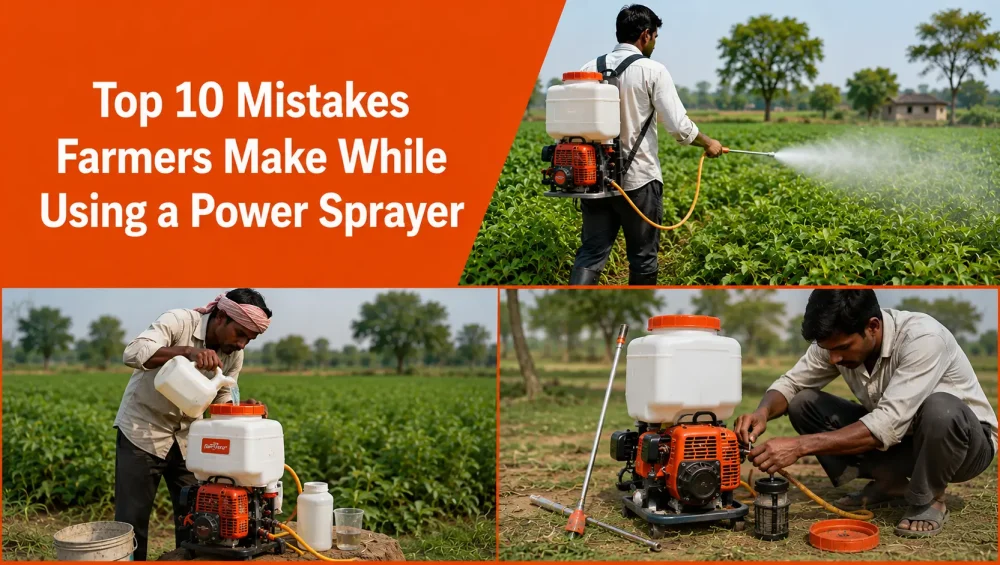
Power sprayers have become an essential part of modern farming. A reliable power sprayer helps farmers apply pesticides, insecticides, herbicides, and liquid fertilizers quickly and efficiently while reducing manual labor and improving crop coverage. However, even a high-quality machine can deliver poor results when it is not used or maintained correctly.
From incorrect calibration to poor chemical handling, small mistakes can affect crop health, increase operating costs, and reduce spraying efficiency. Here are the top 10 common mistakes farmers make while using a power sprayer and practical ways to avoid them.
1. Skipping Equipment Calibration
One of the most common mistakes is assuming that a new or recently serviced sprayer is ready to use without calibration. Incorrect flow rates, pressure, or spraying speed can result in uneven chemical application.
- Over-application can cause crop damage, chemical runoff, and unnecessary expenses.
- Under-application can leave crops inadequately protected against pests and diseases.
How to avoid it: Check nozzle flow rates using a calibration cup and measure the application rate before starting a spraying season. Recalibrate whenever you change nozzles, pressure, or spraying speed.
2. Using the Wrong Nozzle Tip
Nozzles determine spray pattern, droplet size, and application volume. Using the same nozzle for every spraying job can lead to poor coverage or excessive spray drift.
For example, fine droplets can drift easily during herbicide application, while overly coarse droplets may provide inadequate coverage for certain foliar treatments.
How to avoid it: Select the nozzle according to the crop, chemical, required application rate, and environmental conditions. Common options include flat-fan, hollow-cone, and air-induction nozzles.
3. Ignoring Weather Conditions
Weather has a major impact on spraying effectiveness. Strong winds can carry chemical droplets away from the target area, while excessive heat can increase evaporation and reduce application efficiency.
How to avoid it: Check local weather conditions before spraying. Avoid strong winds and extremely hot periods, and follow the pesticide label for recommended weather conditions. Early morning or late afternoon may be suitable for many applications when conditions are favorable.
4. Neglecting Proper Cleaning and Rinsing
Chemical residue left inside the tank, pump, hoses, filters, or nozzles can cause blockages, corrosion, and cross-contamination. Herbicide residue can be particularly problematic if the sprayer is later used on sensitive crops.
How to avoid it: Clean the sprayer immediately after every application. Rinse the tank and flush clean water through the pump, hoses, filters, and nozzles. Use an appropriate tank-cleaning product when required by the chemical label.
5. Operating at the Wrong Pressure
Spraying at an incorrect pressure can significantly affect droplet size and coverage.
| Pressure | Possible Problem |
| Too High | Excessive drift, fine droplets, and faster nozzle wear |
| Too Low | Uneven coverage, poor spray pattern, and larger droplets |
How to avoid it: Monitor the pressure gauge during operation and maintain the pressure recommended by the sprayer and nozzle manufacturer.
6. Using Contaminated or Unfiltered Water
Water containing sand, algae, mud, or other debris can clog filters and nozzles while increasing wear on pump components. Poor-quality water may also affect the performance of some agricultural chemicals.
How to avoid it: Use clean water whenever possible. Keep suction strainers, tank filters, and in-line filters clean, and inspect them regularly during the spraying season.
7. Mixing Chemicals in the Wrong Order
Incorrect tank-mixing practices can cause products to clump, settle, or form unwanted mixtures. This can result in blocked filters and nozzles and may reduce application effectiveness.
How to avoid it: Always read and follow the product label. When multiple products are approved for tank mixing, follow the manufacturer’s recommended mixing order and maintain proper agitation throughout the process.
8. Ignoring Engine and Pump Maintenance
A power sprayer depends on both its engine and pump for reliable performance. Neglecting oil changes, lubrication, belt inspections, or other routine maintenance can lead to unexpected breakdowns during critical spraying periods.
For farmers comparing an agriculture power sprayer, it is important to consider not only performance but also engine reliability, pump quality, spare-parts availability, and after-sales support.
How to avoid it: Follow the manufacturer’s maintenance schedule. Check engine oil, pump oil where applicable, belts, hoses, fittings, and moving parts regularly. Replace worn components before they cause major failures.
9. Skipping Personal Protective Equipment
Agricultural chemicals can pose serious risks when they come into contact with the skin, eyes, or respiratory system. Sprayer operators may be exposed during mixing, filling, spraying, and cleaning.
How to avoid it: Wear the personal protective equipment specified on the chemical label, such as chemical-resistant gloves, protective clothing, eye protection, suitable footwear, and respiratory protection where required.
10. Failing to Inspect Worn Nozzles and Seals
Nozzles gradually wear out, particularly when abrasive formulations are used. A worn nozzle can change the application rate and spray pattern, resulting in uneven coverage and unnecessary chemical use.
Damaged seals, hoses, and fittings can also cause leaks and pressure loss.
How to avoid it: Inspect nozzles, seals, hoses, and connections regularly. Compare nozzle output with a new nozzle of the same type and replace components when their performance falls outside the manufacturer’s recommended tolerance.
What to Consider Before Buying a Power Sprayer
Choosing the right power sprayer machine can make a significant difference in farm productivity. Consider factors such as tank capacity, engine power, pump pressure, flow rate, spray range, fuel efficiency, and ease of maintenance.
Farmers should also compare the power sprayer price with the machine’s long-term operating costs, warranty, availability of spare parts, and expected workload. A machine that matches the size and requirements of your farm can provide better value than simply choosing the lowest-priced option.
Conclusion
Using a power sprayer correctly is just as important as choosing the right machine. Proper calibration, suitable nozzles, favorable spraying conditions, regular cleaning, correct pressure, and routine maintenance can improve spraying efficiency while reducing chemical waste and equipment downtime.
Farmers should also prioritize safe chemical handling and always follow the instructions provided on pesticide and equipment labels. By avoiding these common mistakes, you can get more consistent performance from your sprayer and protect both your crops and your investment.
Frequently Asked Questions
1. How do you use a power sprayer effectively?
Calibrate the sprayer, select the correct nozzle and pressure, use clean water, follow the chemical label, and spray under suitable weather conditions. Regular cleaning and maintenance also help maintain consistent performance.
2. What is the difference between a power sprayer and a manual sprayer?
A power sprayer uses an engine or motor to generate pressure, making it suitable for larger farms and faster spraying. A manual sprayer relies on hand-operated pumping and is generally better suited for smaller areas and lighter spraying tasks.
3. How do I maintain a power sprayer?
Clean the tank, filters, hoses, and nozzles after every use. Regularly check the engine oil, pump, belts, seals, and connections, and follow the manufacturer’s recommended maintenance schedule to prevent breakdowns.