 Phone: 0731-3121900, Mob: 9229297668, 9826655552
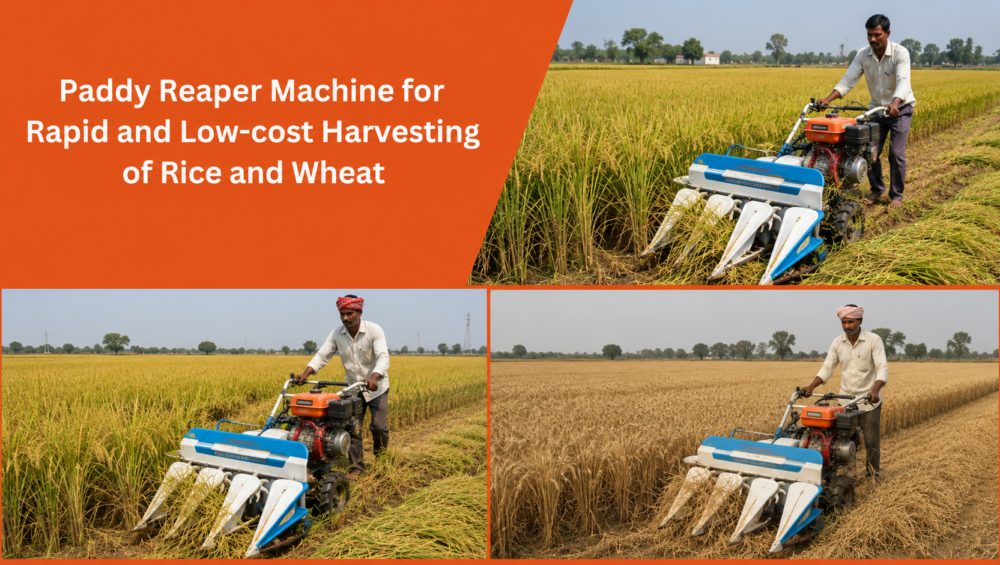
The landscape of Indian agriculture is rapidly evolving from labor-intensive traditional practices to efficient mechanized farming. For farmers cultivating rice and wheat, harvest season is one of the most critical times of the year. Delayed harvesting due to labor shortages or unpredictable weather can lead to heavy crop losses. This is where the Paddy reaper machine becomes a valuable solution, helping farmers harvest crops quickly, efficiently, and at a much lower cost.
Why Choose a Paddy Reaper for Rice and Wheat?
A paddy reaper is a specialized harvesting machine designed to cut crops and place them neatly in rows, also known as windrows. Compared to bulky combine harvesters, reapers are compact, affordable, and ideal for small to medium-sized farms.
High-Speed Harvesting Efficiency
One of the biggest advantages of a reaper is its ability to save time. A modern paddy reaper can harvest nearly one acre of land within 1.5 to 2 hours. The same task would usually require 10–15 laborers working for an entire day manually.
This speed becomes extremely important during peak harvesting periods when weather conditions can change suddenly.
Major Reduction in Harvesting Costs
Labor costs continue to rise across agricultural regions in India. By using a mechanized harvesting solution, farmers can reduce dependency on manual workers and cut harvesting expenses by up to 70%.
Many farmers also compare the paddy reaper price with seasonal labor expenses and realize that the machine becomes a cost-effective investment within a few harvesting cycles.
Minimal Grain Loss
Traditional manual cutting often leads to uneven harvesting and grain wastage. Modern reapers use precision blades that provide a clean cut close to ground level, reducing crop loss significantly.
This also helps farmers maximize straw collection, which is highly useful as livestock feed.
Technical Advantages of Modern Reaper Machines
Modern harvesting machines from reliable manufacturers such as Neptune are built for durability and field efficiency. Many advanced models use corrosion-resistant SUS 304 stainless steel components, making them suitable for wet paddy field conditions.
These machines are typically powered by fuel-efficient 4-stroke engines that deliver strong torque with lower fuel consumption. Adjustable cutting heights also allow farmers to handle both upright and slightly lodged crops effectively.
In addition to reapers, many farmers are now adopting an agricultural power weeder to simplify weed management and improve soil aeration between crop rows.
Hand Weeding vs. Herbicides: Why Pulling Weeds Is the Best Solution for Your Home Lawn
While farmers focus on efficient harvesting in large fields, home gardeners and lawn owners face another common challenge: weed control. When unwanted weeds begin spreading across a lawn, chemical herbicides may appear to be the easiest solution. However, manual hand weeding remains the healthier and more sustainable option for long-term lawn care.
Using a hand weeder machine can further reduce physical effort while ensuring effective weed removal from gardens and small farming plots.
The Hidden Problems with Herbicides
Chemical weed killers may provide quick visible results, but they often create long-term environmental and soil issues.
Soil Damage
Many herbicides harm beneficial microorganisms and earthworms that naturally improve soil fertility and aeration.
Safety Risks
Chemical residues can remain on grass and soil surfaces, creating potential risks for children, pets, and nearby water bodies through runoff contamination.
Weed Resistance
Over time, some weeds develop resistance to repeated herbicide use. This forces gardeners to use stronger chemicals, creating an unhealthy cycle.
Benefits of Hand Weeding
Manual weed removal remains one of the safest and most effective methods for maintaining a healthy garden or lawn.
1. Complete Root Removal
Unlike chemical sprays that may only damage weed leaves, hand pulling can remove the entire root system. This prevents weeds from regrowing after a few weeks.
2. Precision Without Risk
Hand weeding allows precise removal of unwanted plants without harming flowers, vegetables, or decorative plants nearby.
3. Better Soil Aeration
Pulling weeds naturally loosens the surrounding soil and improves airflow around grass roots. It also helps gardeners closely inspect lawns for early signs of pests or nutrient deficiencies.
Tips for Effective Hand Weeding
Weed After Rain
Moist soil makes it much easier to remove weeds completely, including deep roots.
Use Proper Tools
Using tools such as a stand-up weeder or hand weeding fork can reduce strain and improve efficiency.
Cover Bare Soil
After removing weeds, apply mulch or reseed the exposed area to prevent new weed growth.
Conclusion
Whether you are improving farm productivity with a paddy reaper or maintaining a healthy home lawn through manual weeding, choosing the right method makes all the difference. Mechanized harvesting helps farmers save time, reduce labor dependency, and improve yields, while traditional hand weeding supports healthier soil and safer gardens.
By combining smart agricultural technology with sustainable land-care practices, both farmers and homeowners can create more productive, efficient, and environmentally friendly landscapes.
Frequently Asked Questions (FAQs)
1. What is a Paddy Reaper machine used for?
A Paddy Reaper machine is used for harvesting crops like rice and wheat quickly and efficiently. It cuts the crops close to the ground and arranges them neatly in rows, helping farmers save time, labor, and harvesting costs.
2. What is the average paddy reaper price in India?
The paddy reaper price in India depends on the model, engine capacity, and features. Generally, prices can range from affordable small-farm models to advanced heavy-duty machines designed for larger agricultural operations.
3. How is a hand weeder machine better than chemical herbicides?
A hand weeder machine removes weeds directly from the roots without using harmful chemicals. It is safer for soil health, pets, children, and nearby plants while also helping prevent weed regrowth and chemical resistance.