 Phone: 0731-3121900, Mob: 9229297668, 9826655552
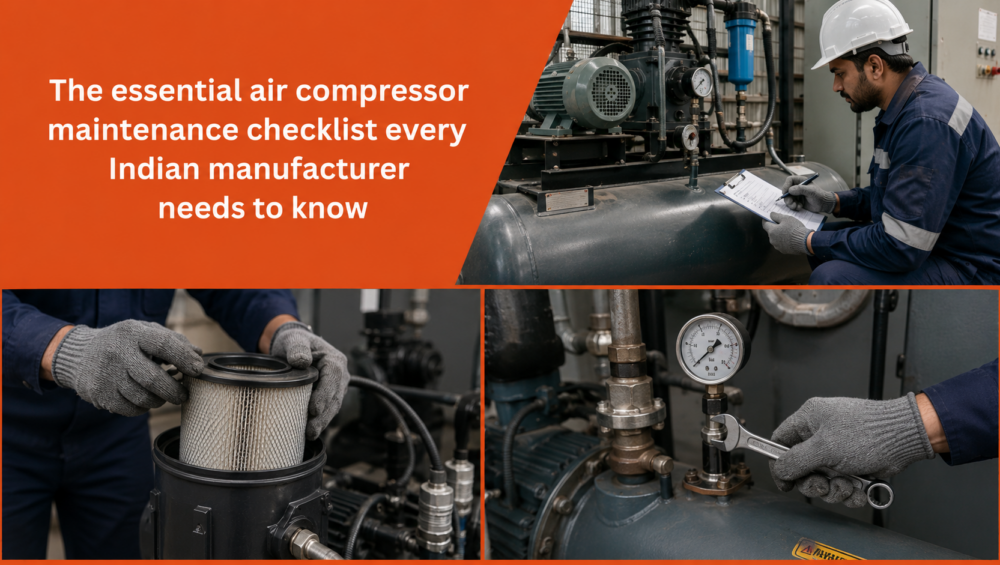
In the heart of India’s rapidly growing industrial sector from the automobile plants of Chennai to the textile mills of Surat—the air compressor is often called the “fourth utility.” Alongside electricity, water, and gas, compressed air powers the machinery that keeps Indian manufacturing moving efficiently. Today, leading air compressor suppliers are helping industries improve productivity with advanced compressed air solutions designed for Indian operating conditions.
However, India’s industrial environment creates unique operational challenges. High temperatures, monsoon humidity, and airborne dust can reduce compressor efficiency and shorten equipment lifespan. Without a proper maintenance strategy, unexpected breakdowns can halt production lines, resulting in expensive downtime and delayed deliveries.
To ensure uninterrupted productivity, every manufacturer should follow a structured air compressor maintenance checklist.
The Daily Routine: Quick Checks for Maximum Uptime
Preventive maintenance does not always require hours of work. Spending just a few minutes each day inspecting your compressor can help avoid costly repairs later.
Drain the Condensate Receiver Tanks
India’s humid climate causes compressors to generate large amounts of moisture. Draining condensate daily helps prevent internal corrosion, rust formation, and moisture contamination inside the compressed air network.
Monitor Temperature and Pressure Gauges
Always verify that operating temperatures and pressure levels remain within the manufacturer’s recommended range. Sudden increases often indicate airflow restrictions, cooling problems, or internal wear.
Check for Air and Oil Leaks
Even a small leak in the compressed air system can waste significant electricity and reduce operational efficiency. Listen carefully for hissing sounds and inspect surrounding areas for oil leakage.
The Weekly Schedule: Deep-Dive Inspections
Weekly maintenance focuses on protecting critical components from India’s dusty industrial conditions.
Inspect and Clean the Air Intake Filter
Industries such as foundries, cement plants, and plastic molding facilities expose compressors to heavy dust. A clogged air filter restricts airflow, increases energy consumption, and accelerates component wear.
Verify Oil Levels
For oil-lubricated compressors, maintaining proper oil levels is essential. Low lubrication increases friction, overheating, and the risk of pump failure. Always use the manufacturer-recommended oil grade for optimal performance.
The Monthly & Quarterly Blueprint: System Optimization
Long-term compressor reliability depends on maintaining cooling systems, drive assemblies, and electrical components.
Clean the Aftercoolers and Radiators
Dust accumulation on cooling fins reduces heat dissipation and increases internal operating temperatures. Cleaning radiators and aftercoolers regularly improves cooling efficiency and extends compressor life.
Inspect V-Belts and Drive Couplings
Loose or misaligned belts reduce efficiency and increase wear on moving parts. Check for proper belt tension and alignment to maintain smooth operation.
Tighten Electrical Connections
Continuous industrial vibration can loosen electrical terminals over time. Inspect and tighten electrical connections periodically to avoid overheating, motor damage, or phase imbalance issues.
Portable Air Compressor Manufacturer: Choosing the Right Partner for Reliable Long-Term Industrial Performance
While maintenance is critical, long-term compressor performance begins with choosing the right portable air compressor manufacturer.
For industries such as construction, mining, infrastructure, and remote manufacturing operations, portable air compressors provide essential flexibility. However, selecting a manufacturing partner should involve more than simply comparing prices.
What to Look for in an Industrial Compressor Partner
Robust Engineering for Indian Conditions
The ideal manufacturer designs equipment specifically for India’s harsh operating environments. Look for compressors equipped with tropicalized cooling systems and high-ambient temperature packages capable of performing reliably even during extreme summers.
High-Quality Internal Components
Compressor durability depends heavily on the quality of internal components. Leading industrial compressor manufacturers focus on premium-grade materials, efficient screw elements, and corrosion-resistant valves designed for continuous industrial applications.
Strong After-Sales Service Network
Maintenance becomes difficult when spare parts are unavailable. Always choose a manufacturer with dependable after-sales support, readily available spare parts, and a strong pan-India service presence. Companies like neptune industries are recognized for offering reliable support and service solutions for industrial equipment.
Energy Efficiency and Lower Operating Costs
Electricity costs account for a major portion of a compressor’s lifetime expense. Energy-efficient compressors with optimized specific power consumption (SPC) deliver higher Free Air Delivery (FAD) while reducing overall operational costs. Before you buy air compressor equipment, evaluating long-term energy savings is just as important as comparing upfront pricing.
Final Thoughts
Maintaining an efficient compressed air system requires a two-pronged strategy: implementing a disciplined maintenance routine and partnering with a reliable equipment manufacturer. Together, these practices help Indian manufacturers reduce downtime, lower maintenance costs, improve energy efficiency, and extend equipment lifespan.
By investing in preventive care and selecting the right compressor partner, businesses can ensure uninterrupted industrial productivity and long-term operational success.
FAQs
1. How often should an industrial air compressor be serviced?
Industrial air compressors should undergo daily, weekly, monthly, and quarterly maintenance checks. Daily inspections help identify leaks and moisture build-up, while quarterly servicing ensures cooling systems, filters, and electrical connections remain in optimal condition.
2. Why is preventive maintenance important for air compressors?
Preventive maintenance improves compressor efficiency, reduces unexpected downtime, lowers electricity consumption, and extends equipment lifespan. Regular servicing also helps manufacturers avoid costly repairs and production delays.
3. What should I consider before buying an industrial air compressor?
Before selecting a compressor, evaluate factors such as energy efficiency, cooling performance, spare parts availability, after-sales support, and operating conditions. Choosing reliable air compressor suppliers ensures better long-term performance and maintenance support.