 Phone: 0731-3121900, Mob: 9229297668, 9826655552
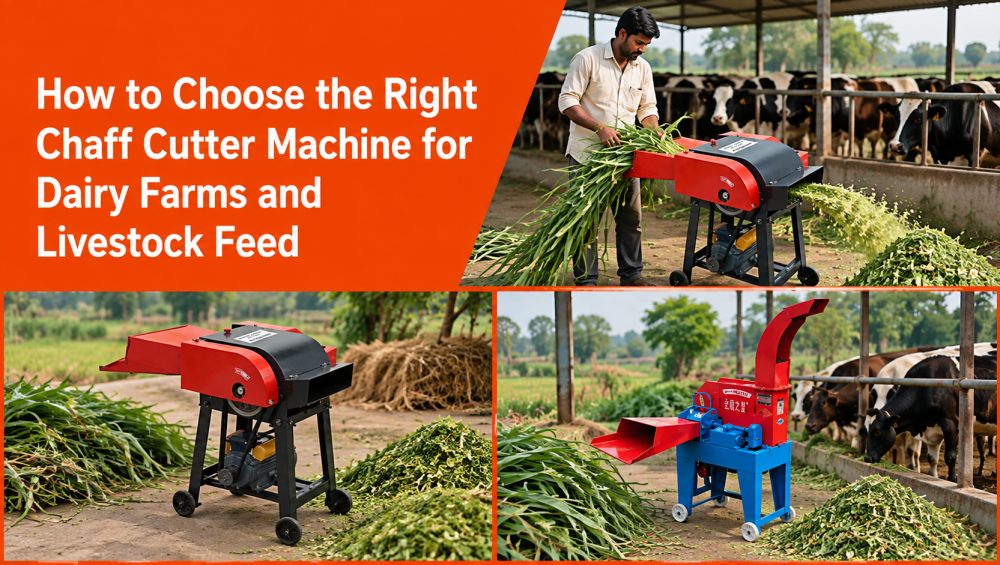
Efficient fodder management is essential for running a productive and profitable dairy farm. Feeding livestock with long grass, hay, straw, maize stalks, or other unprocessed fodder can make feeding more time-consuming and may lead to unnecessary wastage. Chopping fodder into smaller, uniform pieces makes it easier to handle, mix, and serve to animals.
A reliable chaff cutter machine can make this daily task much easier. Depending on the size of your farm, you can choose from manual, electric, engine-operated, and tractor-driven models designed for different fodder types and workloads.
However, choosing the right machine requires more than simply comparing prices. Factors such as herd size, cutting capacity, power source, blade quality, machine construction, safety, and after-sales support should all be considered before making a purchase.
Why Is a Chaff Cutter Important for Dairy Farms?
Fodder preparation is a regular task on dairy farms, and manually cutting large quantities of grass and crop residues can require considerable time and labour. A mechanical cutter can simplify this process by producing smaller and more manageable pieces.
Better Fodder Handling
Chopped fodder is easier to transport, store, and distribute. Smaller pieces can also make it more convenient to combine different types of fodder before feeding.
Helps Reduce Fodder Wastage
When fodder is cut into suitable lengths, animals can consume it more easily instead of leaving behind long, tough stems. This can help farmers make better use of the available feed.
Easier Feed Mixing
Uniformly cut fodder can be mixed with dry fodder, silage, and other feed ingredients more consistently. This makes daily ration preparation more convenient.
Saves Time and Labour
For farms processing large amounts of fodder every day, a mechanical cutter can significantly reduce the manual effort involved in chopping feed.
5 Factors to Consider Before Buying a Chaff Cutter
1. Consider Your Herd Size and Fodder Requirement
The first step is to determine how much fodder you need to process every day. A small dairy farm does not require the same cutting capacity as a commercial livestock operation.
For a small herd, a compact machine may be sufficient for regular fodder preparation. Medium-sized farms may benefit from a higher-capacity motorized machine, while large dairy farms may need heavy-duty equipment capable of processing large volumes in less time.
It is also important to consider future expansion. If you plan to increase your herd, choosing a machine with some additional capacity can prevent the need for an immediate replacement.
2. Choose the Right Power Source
The power source directly affects machine operation, maintenance, mobility, and running costs. Consider the availability of electricity at your farm before selecting a model.
Electric Chaff Cutter
An electric chaff cutter is a convenient option for farms with a reliable electricity supply. These machines are suitable for regular fodder preparation and can be practical for small and medium-sized dairy operations.
Engine-Operated Models
Diesel or petrol-powered machines can be useful where electricity is unavailable or unreliable. They can also provide greater flexibility for farms that need to operate the cutter at different locations.
Tractor PTO Models
Large farms that already have tractors may consider PTO-driven machines. These models can be suitable for processing substantial quantities of fodder and handling demanding farm applications.
3. Check Blade Quality and Cutting Length
The blades are one of the most important parts of a fodder-cutting machine. Choose a model with durable blades designed for regular agricultural use.
Also check whether the machine provides an appropriate cutting length for your fodder. Grass, hay, maize stalks, and other crop residues may require different cutting settings.
A good machine should allow convenient blade maintenance and provide easy access to replacement blades when required.
4. Look for Strong Construction and Safety Features
A chaff cutter should be sturdy enough to handle continuous operation without excessive movement or vibration. A strong frame and well-designed components can contribute to better stability and long-term usability.
Safety features are equally important because the machine contains moving and cutting components. Look for features such as:
- Extended feeding chutes that keep hands away from the cutting area.
- Properly covered belts and pulleys.
- Protective covers around moving components.
- Stable machine frames and bases.
- Safe mechanisms for clearing fodder blockages.
- Easy-to-access controls for convenient operation.
Operators should always follow the manufacturer’s safety instructions while using the machine.
5. Check Maintenance and After-Sales Support
Regular maintenance is essential for keeping a fodder cutter working efficiently. Before purchasing, check the availability and cost of commonly replaced components such as blades, belts, bearings, and gears.
Good after-sales support can also make ownership easier. Choose a manufacturer or dealer that provides warranty assistance, spare parts, maintenance guidance, and service support.
A machine that is easy to maintain can help minimize unnecessary downtime during busy feeding schedules.
Portable vs. Fixed Chaff Cutters: Which One Should You Choose?
Farmers with limited space or multiple fodder preparation areas may prefer a portable chaff cutter. Its mobility makes it easier to move between locations when required.
Portable models can be particularly useful for smaller farms, livestock owners, and operations where fodder is collected or stored away from the main feeding area.
If you are comparing different models, checking specifications, motor power, cutting capacity, portability, and customer support is important before buying a portable chaff cutter online.
For a permanently installed setup with a dedicated fodder preparation area, a fixed machine may be a better choice. The right option depends on your farm layout, daily workload, and mobility requirements.
How to Maintain Your Chaff Cutter for Better Performance
Buying the right machine is only the first step. Regular maintenance can help maintain performance and extend the working life of the equipment.
Keep the cutting chamber and feeding area clean after use. Inspect blades regularly and sharpen or replace them when necessary. Check belts, bearings, fasteners, and other moving components for signs of wear.
For electric models, inspect electrical connections and follow the manufacturer’s recommendations for motor maintenance. For engine-operated machines, maintain the engine according to the recommended service schedule.
Most importantly, never perform cleaning, inspection, or maintenance while the machine is running. Switch it off and follow the manufacturer’s safety procedures first.
Final Verdict
Choosing the right fodder cutter depends on your farm’s daily workload, herd size, fodder type, available power supply, and operating requirements. A compact machine can be sufficient for a small dairy farm, while larger livestock operations may require high-capacity electric, engine-operated, or tractor-driven models.
Before making a purchase, compare cutting capacity, blade quality, machine construction, safety features, maintenance requirements, spare-part availability, and after-sales support. Investing in a machine that matches your current requirements while allowing room for future growth can make fodder preparation more efficient and convenient.
Frequently Asked Questions
1. How do I choose the right chaff cutter for a dairy farm?
Choose a machine based on your herd size, daily fodder requirement, cutting capacity, power availability, blade quality, and maintenance needs. Small farms can use compact models, while larger dairy farms may need heavy-duty electric, engine-operated, or tractor-driven machines.
2. Which chaff cutter is best for a small dairy farm?
A compact manual or electric model can be suitable for a small dairy farm. Consider the machine’s capacity, motor power, cutting length, safety features, and availability of spare parts before making a decision.
3. What are the main benefits of using a chaff cutter for livestock feed?
A chaff cutter reduces long grass, hay, straw, and crop residues into smaller pieces, making fodder easier to handle and mix. It can also reduce manual chopping work and make daily feed preparation more convenient.